

TL;DR:
- Pawning a gold ring involves providing collateral for a short-term, regulated loan that can be reclaimed by repaying the amount with interest and fees. If the loan is not repaid by the deadline, the pawnbroker can sell the ring to recover the debt, but the process is risk-limited and straightforward. Proper preparation and understanding of the process, including keeping the pawn ticket and considering renewal options, help ensure successful redemption.
Pawning a gold ring is a short-term, collateral-backed loan where you hand over your ring as security and reclaim it later by repaying the loan plus agreed interest and fees. Yes, you absolutely can get it back. The industry term for this is a pawn loan, and it is a completely legitimate financial arrangement regulated in the UK. Loan terms typically run from 30 to 120 days, giving you a clear window to repay and collect your ring. Miss that window without acting, and you risk forfeiting the piece entirely. So the process is straightforward, but the details matter enormously.
Can I pawn my gold ring and get it back later?
The short answer is yes, and the process is more structured than most people expect. A pawn loan works like this: you bring in your gold ring, the pawnbroker assesses its value, offers you a loan against it, and holds the ring securely until you repay. Pawn loans are non-recourse, which means if you cannot repay, you lose the ring but nothing else. No debt collectors. No credit score damage. That makes it a genuinely risk-limited way to borrow short-term cash.
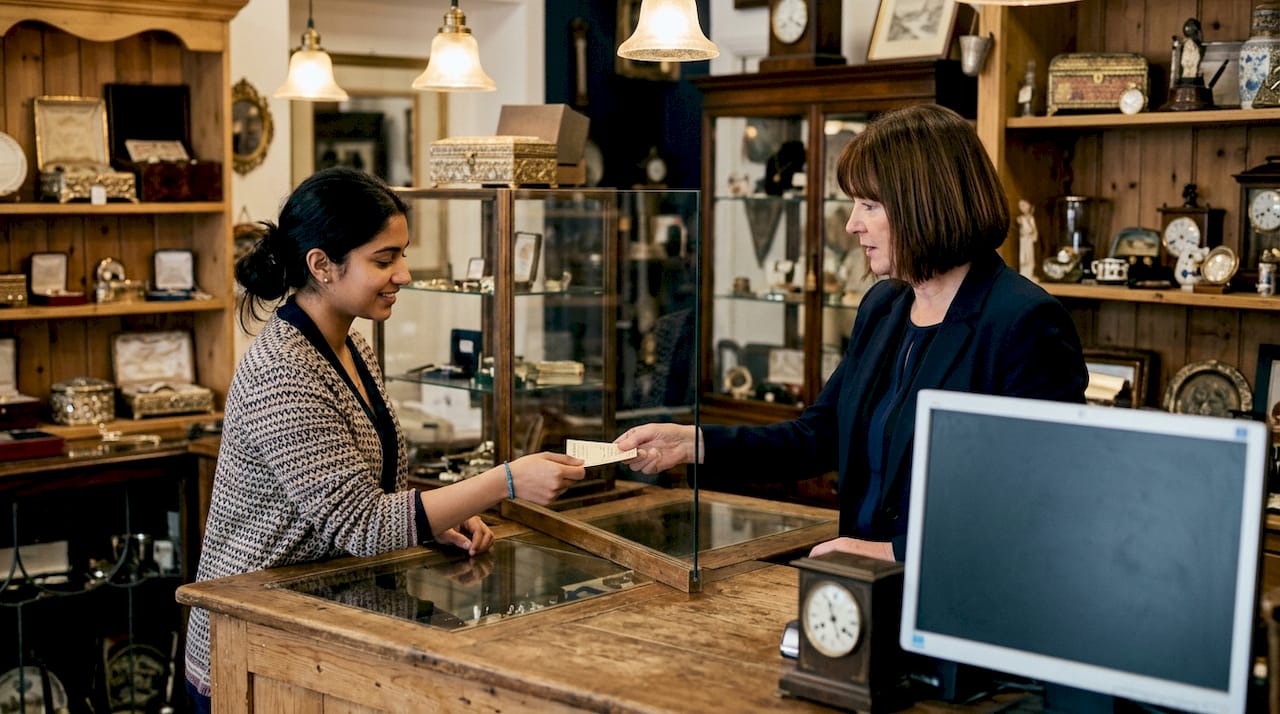
The loan amount is calculated on your gold ring’s purity and weight, not its sentimental value or the brand name on the box. Pawn shops price gold solely on intrinsic metal content, so a 22-carat ring will fetch a higher offer than an 18-carat ring of the same weight. The market price of gold on the day also plays a role. Understanding this upfront saves a lot of disappointment at the counter.
Pawning suits people who need temporary cash but want to keep ownership of a piece that means something to them. An engagement ring, a family heirloom, a 21st birthday gift. Pawning is effective for retaining ownership of emotionally valuable pieces while accessing funds quickly. Selling is permanent. Pawning is not.
What to prepare before you pawn your gold ring
Getting this right before you walk through the door saves time and protects you. Here is what you need:
- Valid government-issued photo ID. A passport or driving licence is standard. Testing and documentation are required by law, and no reputable pawnbroker will proceed without ID.
- Original receipts or hallmark details. These are not mandatory, but they help verify authenticity and can support a better offer.
- Knowledge of your ring’s hallmark. UK gold jewellery carries a hallmark showing carat purity (375 for 9ct, 585 for 14ct, 750 for 18ct, 916 for 22ct). Know what yours says.
- A written pawn ticket. The pawnbroker must provide this. It details the loan amount, interest rate, fees, and the maturity date. Keep it somewhere safe.
- Questions about loan extensions. Ask before you sign whether the pawnbroker allows renewals and what the cost is.
- Confirmation of insured storage. Your ring should be stored securely and insured against loss or damage during the loan period.
Pro Tip: Ask the pawnbroker to test your ring’s purity and weight in front of you. Reputable shops do this as standard, and watching the process gives you confidence the offer is fair.
How the pawnbroking loan process works
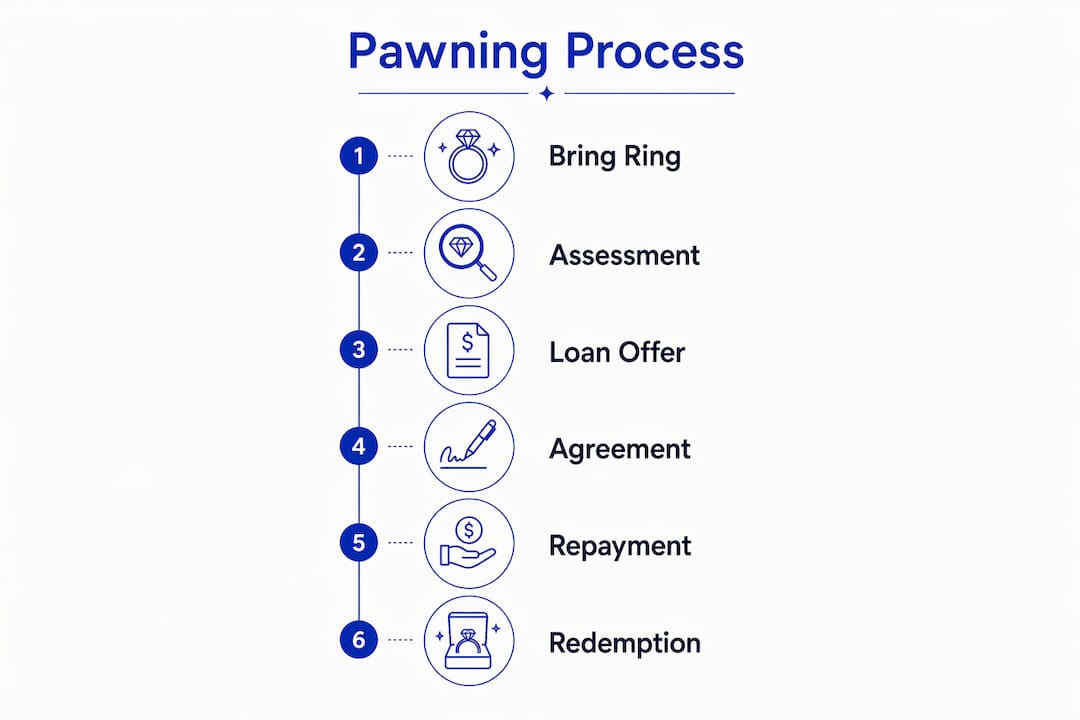
Here is the full process from walking in to walking out with your ring back.
- Bring in your ring. The pawnbroker tests purity using an acid test or electronic tester, and weighs the ring on a calibrated scale.
- Receive a loan offer. The offer is based on gold purity, weight, and the current gold spot price. Loan advances typically range from 70 to 80% of melt value, which is notably higher than outright sale offers.
- Sign the agreement and receive your pawn ticket. This document is your proof of ownership and your receipt. Guard it.
- Your ring is stored securely. The pawnbroker holds it for the agreed loan term, typically 30 to 120 days.
- Repay before the deadline. Pay the principal plus accrued interest and any storage fees to collect your ring.
- Or renew the loan. Pawnbrokers often allow loan renewal by paying only the interest and fees, resetting the maturity date without requiring full repayment.
- Or forfeit the ring. If you do not repay or renew, the pawnbroker takes ownership and sells the ring to recover the loan.
Pro Tip: Set a calendar reminder two weeks before your loan matures. That gives you time to arrange funds or contact the pawnbroker about a renewal before the deadline passes.
Here is a quick summary of how the loan term options play out:
| Option | What you pay | Outcome |
|---|---|---|
| Full repayment | Principal + interest + fees | Ring returned to you |
| Loan renewal | Interest + storage fees only | Loan term extended |
| Forfeiture | Nothing | Ring sold by pawnbroker |
Pawning versus selling: the financial trade-off
This is where people get confused, so let’s be direct about the numbers. Loan offers typically reach 70–80% of melt value, while direct sale offers from the same shop tend to land at 40–60%. That sounds backwards until you understand why.
Pawn shops calculate offers by factoring in storage costs, market volatility, and the likelihood of non-redemption over the loan term. They are taking on risk by holding your ring and lending against it. The loan offer is higher than a sale offer because they expect to earn interest on top. The sale offer is lower because they are buying outright and need margin for resale.
So which is better for you? It depends on one question: do you want the ring back?
- Pawn if you need short-term cash and want to keep ownership open.
- Pawn if the ring has sentimental value that outweighs the cost of interest.
- Sell if you have no intention of reclaiming the piece and want the cleanest transaction.
- Sell if the interest costs over a long loan term would eat significantly into the ring’s value.
For a deeper look at pawning versus selling gold jewellery, the decision usually comes down to emotional attachment and your realistic ability to repay within the term.
Common pitfalls that cause people to lose their gold ring
Most people who lose their pawned ring do not lose it through bad luck. They lose it through avoidable mistakes.
- Losing the pawn ticket. The pawn ticket is your proof of ownership and is required to reclaim your ring. Losing it complicates the process significantly. Store it with your important documents, not in your wallet.
- Missing the maturity date. The deadline is firm. Once it passes without repayment or renewal, forfeiture begins. Do not assume the pawnbroker will chase you.
- Not asking about renewal terms upfront. Some shops charge high renewal fees. Know the cost before you sign, not after.
- Ignoring hidden fees. Storage charges, administration fees, and insurance costs can add up. Ask for a full breakdown of the total redemption cost before agreeing.
- Overestimating the loan offer. Gold value fluctuates. The offer you receive reflects the gold price on that specific day.
“The pawn ticket is not just a receipt. It is your legal claim to the ring. Treat it like the ring itself.”
Pro Tip: Photograph your pawn ticket and email it to yourself the same day you receive it. If the physical copy is lost, you have a digital record to support your redemption claim.
How to redeem your pawned gold ring
Redeeming your ring is straightforward if you follow the steps correctly.
- Gather your pawn ticket. You need the original ticket to present at the counter. If you have lost it, contact the pawnbroker immediately and explain the situation. Most reputable shops have a process for lost tickets, though it may require additional ID verification.
- Calculate your total repayment. Add the principal loan amount to all accrued interest and any agreed fees. Repayment must be completed before the deadline to avoid forfeiture.
- Choose your payment method. Most pawnbrokers accept cash, debit card, and bank transfer. Confirm accepted methods before you visit to avoid a wasted trip.
- Visit the shop within the loan term. Do not leave it to the final day if you can help it. Unexpected delays happen.
- Surrender the pawn ticket and collect your ring. The pawnbroker cancels the ticket, you pay the agreed amount, and your ring is returned. Check the condition of the ring before you leave the shop.
For a full breakdown of how pawnbroking works at a retail jeweller, including what to expect at each stage, the process is consistent across reputable UK operators.
Key takeaways
Pawning a gold ring is a legitimate, risk-limited loan where you retain the right to reclaim your ring by repaying the principal, interest, and fees within the agreed term of 30 to 120 days.
| Point | Details |
|---|---|
| Reclaiming is always possible | Repay the principal plus interest and fees before the maturity date to get your ring back. |
| Loan offers reflect melt value | Expect 70–80% of your ring’s melt value as a loan offer, based on purity and weight. |
| The pawn ticket is critical | Keep it safe. It is your legal proof of ownership and required for redemption. |
| Loan renewals buy you time | Pay interest only to extend the term without losing the ring or repaying the full principal. |
| Forfeiture carries no further debt | Pawn loans are non-recourse. Losing the ring ends the obligation with no credit impact. |
Why I think pawning gets an unfair reputation
People hear “pawn shop” and picture desperation. That is a shame, because the mechanics of a pawn loan are genuinely clever for the right situation.
I have spoken with customers who were sitting on a gold ring worth several hundred pounds, needed cash for a few weeks, and had no desire to sell something with real sentimental weight. A pawn loan solved that cleanly. No credit check, no lengthy application, no ongoing debt if things went sideways. Just a clear, time-limited agreement with a known cost.
The thing most people get wrong is treating the pawn ticket carelessly. I have seen customers lose it and then act surprised when redemption becomes complicated. That ticket is the deal. Lose it and you are relying on the pawnbroker’s goodwill and your ID to prove the ring is yours.
My honest advice? Go in knowing your gold’s carat and approximate weight. Ask every question about fees before you sign. And if you are not confident you can repay within the term, ask about renewal costs on day one, not day 29. The pawnbrokers who are worth dealing with will answer every question without flinching. The ones who get vague about fees are the ones to walk away from.
Pawning is not a last resort. For short-term cash needs where you genuinely want the piece back, it is often the most sensible option available.
— James
Pawnbroking services at Blackwelljewellers
Blackwelljewellers has offered trusted pawnbroking services for over 20 years from its Kent stores in Maidstone, Gravesend, and Bexleyheath. The team handles gold ring collateral with full in-house appraisal, secure storage, and transparent loan terms from the first conversation.

Every loan agreement at Blackwelljewellers includes a clear breakdown of interest, fees, and the redemption deadline. Customers can also browse the second-hand jewellery collection for authenticated, hallmarked gold pieces if they are looking to buy rather than borrow. Whether you are pawning a ring for the first time or returning to redeem a piece, the team is there in person and online to walk you through every step.
FAQ
Can I pawn my gold ring and get it back?
Yes. You reclaim your ring by repaying the loan principal plus accrued interest and fees before the maturity date. Loan terms typically run from 30 to 120 days.
What happens if I miss the repayment deadline?
The pawnbroker takes ownership of the ring and sells it to recover the loan. Pawn loans are non-recourse, so you owe nothing further and your credit score is unaffected.
How much will I get for pawning a gold ring?
Loan offers typically reach 70–80% of melt value, calculated on the ring’s gold purity and weight at the current market price.
Can I extend my pawn loan if I cannot repay in time?
Yes. Most pawnbrokers allow renewal by paying the accrued interest and storage fees, which resets the maturity date without requiring full repayment of the principal.
What do I need to bring to pawn a gold ring in the UK?
Bring a valid government-issued photo ID and the ring itself. Original receipts or hallmark details help but are not required. The pawnbroker will test purity and weight in your presence and issue a written pawn ticket.