
TL;DR:
- Pawning jewelry involves a short-term secured loan with the option to reclaim the item after repayment, while selling transfers ownership for immediate cash. Pawning suits those with a clear repayment plan and sentimental attachment, whereas selling generally provides higher cash and eliminates ongoing costs. Making an informed decision depends on your desire to keep the item, financial stability, and urgency of cash needs.
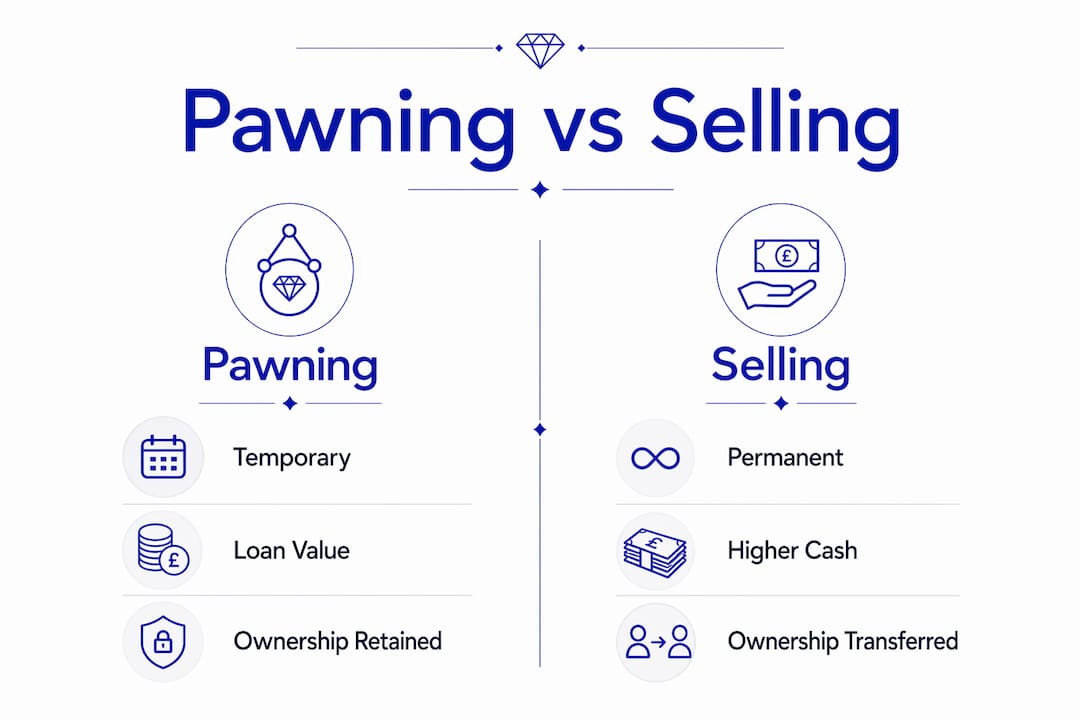
Pawning jewellery is defined as securing a short-term loan using your item as collateral, with the option to reclaim it once you repay the loan plus interest. Selling jewellery, by contrast, is a permanent transfer of ownership in exchange for immediate cash. Whether pawning jewellery is better than selling it depends entirely on three things: whether you want to keep the item, whether you can realistically repay a loan, and how urgently you need the money. Neither option is universally superior. But one of them is almost certainly right for your situation, and this guide will help you work out which.
Is pawning jewellery better than selling it? The core difference explained
The industry term for what most people call “pawning” is a pawn loan or secured loan against personal property. You hand over your jewellery, the pawnbroker assesses it, and you receive a loan based on their valuation. You then have an agreed window (typically one to six months in the UK) to repay the loan plus interest and reclaim your item. If you don’t repay, the pawnbroker keeps the jewellery and sells it to recover their money.

Selling jewellery involves a permanent ownership transfer and typically yields higher upfront cash than pawning. There are no repayments, no interest charges, and no risk of losing the item later because you’ve already exchanged it for cash. The transaction is final. That finality is either a relief or a regret, depending on how attached you are to the piece.
The UK pawnbroking market was worth £1,991 million in 2024, which tells you this is not a niche or desperate-last-resort industry. Millions of people use pawn loans as a practical, short-term financial tool. Understanding both options clearly is the first step toward making the right call.
How does the pawning process work?
Knowing what to expect before you walk into a pawnbroker removes a lot of the anxiety. Here’s the practical process, step by step.
- Gather your documents. To pawn jewellery, bring valid photo ID (passport or driving licence), proof of address (a utility bill or bank statement), and any original ownership documents you have. Authenticity certificates, purchase receipts, and repair invoices all improve the accuracy of your loan offer.
- Prepare the jewellery. Clean your piece gently with a soft cloth before your visit. A well-presented item signals care and makes hallmarks easier to read. Don’t use harsh chemicals or ultrasonic cleaners without knowing what your piece can handle.
- Understand the valuation. Pawnbrokers evaluate jewellery based on weight, hallmark, condition, and brand. A hallmarked 18ct gold ring from a recognised maker will attract a better offer than an unmarked piece of similar weight. Condition matters more than most people expect.
- Review the loan terms. The pawnbroker will offer a loan amount, state the interest rate, and outline the repayment window. Read everything before signing. Ask what happens if you miss the repayment date.
- Have a repayment plan before you agree. This is the step most people skip, and it’s the one that causes the most regret.
Pawn shop offers depend heavily on resale risk. When you bring paperwork, you shift your item from “test and guess” to “moveable inventory” in the pawnbroker’s mind, which directly improves your offer. Small actions like sending hallmark photos and scale images in advance can improve loan estimates before you even arrive.
Pro Tip: Get a professional valuation from a reputable jeweller before visiting a pawnbroker. Knowing your item’s market value gives you a benchmark and the confidence to negotiate.
What are the pros and cons of pawning jewellery?
Pawning is genuinely useful in the right circumstances. It’s also genuinely risky in the wrong ones. Here’s the honest breakdown.
The benefits:
- You retain ownership if you repay the loan. The item comes back to you.
- Pawn loans don’t affect your credit score, involve no credit checks, and require no bank approval. Fast cash without the bureaucracy.
- Pawning suits those with sentimental jewellery and short-term cash needs who have a repayment plan in place.
- The non-recourse nature of pawn loans means that if you default, you lose the item but face no further financial penalties or debt collection.
- Emotional attachment influences choice significantly. Pawning avoids a forced permanent decision when you’re not ready to let go.
The drawbacks:
- Loan amounts are typically 25% to 60% of the item’s resale value. You will not receive full market price.
- Interest and storage fees accumulate over the loan period. The longer you wait to repay, the more it costs.
- If your financial situation doesn’t improve, you risk losing the item anyway, having received less cash than selling would have provided.
Pro Tip: Only pawn jewellery if you have a clear, mapped repayment plan that fits your current income. Pawning without one is just a slower way of selling, but with extra fees.
What are the pros and cons of selling jewellery outright?
Selling is the simpler transaction. You hand over the item, you receive cash, and that’s the end of it. No loan terms, no interest, no repayment anxiety.
The benefits:
- Selling typically delivers the highest immediate cash payout based on current market value. You’re not borrowing against the item; you’re liquidating it.
- No ongoing financial obligation. Once the sale is complete, you have no further connection to the piece.
- Simplicity. The transaction is clean, final, and stress-free once agreed.
- Selling is the wiser choice when you have no intention of reclaiming the item or when sentimental value is low.
The drawbacks:
- Permanent loss of ownership. If you later regret selling a piece with sentimental significance, there’s no reversing it.
- The price you receive depends heavily on where you sell. A reputable specialist jeweller will offer more than a generic second-hand shop, because they understand what they’re buying.
| Factor | Selling outright |
|---|---|
| Ownership | Permanently transferred at point of sale |
| Cash received | Higher than pawning; based on market value |
| Ongoing costs | None |
| Risk | Regret if item had sentimental value |
| Best for | Those wanting closure and maximum cash |
Where you sell matters enormously. A reputable jewellery buyer who specialises in pre-owned and second-hand pieces will assess your item properly, rather than offering a blanket low price to cover their uncertainty.
How do pawning and selling jewellery compare on key factors?
Here’s the side-by-side view that most people actually need before making a decision.
| Factor | Pawning | Selling |
|---|---|---|
| Ownership transfer | Temporary; reclaimed on repayment | Permanent; immediate |
| Cash received | 25% to 60% of resale value | Closer to full market value |
| Ongoing costs | Interest and storage fees | None |
| Risk of loss | Yes, if repayment is missed | No financial risk post-sale |
| Credit check required | No | No |
| Sentimental value | Preserved if repaid | Lost permanently |
| Best suited for | Short-term cash need with repayment plan | Closure, maximum cash, no reclaim intent |
The cash gap between pawning and selling is the detail most people underestimate. If your item is worth £1,000 on the open market, a pawn loan might offer you £250 to £600. Selling to a reputable buyer might yield £700 to £850. That difference matters when you’re making a financial decision under pressure.
Negotiation is standard practice in pawn shops. Politely asking for a better offer, especially when you have proof of value, regularly results in improved terms. Higher offers are more commonly found at specialist, reputable jewellers rather than generic second-hand shops.
How to decide if pawning or selling is right for your situation
Work through these questions honestly before you commit to either option.
- Do you want to keep the item? If yes, pawning is the only option that gives you that possibility. If no, selling is simpler and more financially rewarding.
- Can you repay a pawn loan without stress? Be brutally honest here. If repayment is uncertain, selling is more responsible than risking item loss through pawning. Pawn loans are best for those with a mapped repayment plan that fits their current finances.
- How urgent is your cash need? Both options deliver cash quickly. But if you need the maximum amount possible right now, selling wins on value.
- What is the item worth? Get a professional valuation or at least two independent quotes before agreeing to anything. Knowing your baseline prevents you from accepting a low offer out of desperation.
- Have you considered getting the item repaired first? A piece in better condition attracts better offers whether you’re pawning or selling. Blackwelljewellers offers jewellery repair services that can improve the condition and value of your item before you take it anywhere.
- Have you shopped around? One quote is never enough. Visit at least two or three buyers or pawnbrokers and compare offers. The spread can be significant.
Pro Tip: Bring detailed documentation and photos of hallmarks and receipts to every appointment. This reduces the pawnbroker’s perceived risk and nudges their offer upward.
A practical example: if you have a diamond engagement ring you’d like to reclaim in three months once a work contract pays out, pawning makes sense if the interest cost is manageable. If you have a gold chain from a relationship that ended and you simply want cash, selling is the cleaner, more profitable choice.
Key takeaways
Pawning jewellery is better than selling it only when you have a clear repayment plan and a genuine desire to reclaim the item; otherwise, selling delivers more cash with less risk.
| Point | Details |
|---|---|
| Pawning preserves ownership | You reclaim your item if you repay the loan within the agreed window. |
| Selling yields more cash | Selling typically returns closer to full market value than a pawn loan. |
| Pawn loans carry ongoing costs | Interest and storage fees accumulate; factor these into your repayment plan. |
| Documentation improves offers | Hallmark photos, receipts, and certificates increase loan and sale valuations. |
| Negotiation is expected | Always ask for a better offer; reputable specialists consistently outperform generic shops. |
My honest view on pawning versus selling
Here’s what I’ve seen after years of working with jewellery and the people who bring it to us. The biggest mistake people make is treating pawning as a “safe” option because they think they’ll definitely repay it. They won’t always. Life happens. The loan period ends, the money isn’t there, and they lose the item anyway. Except now they’ve also paid interest on top.
Pawning is genuinely brilliant as a short-term financial bridge, but only if you treat the repayment date like a non-negotiable bill. Write it in your calendar. Set a reminder. Budget for it now, not later.
Selling, on the other hand, gets a bad reputation for being “giving up.” It isn’t. If you don’t want the item, selling it to someone who will love it is the right thing to do. You get more money, you get closure, and you move on. That’s not failure. That’s good financial sense.
The one thing I’d always say: don’t go to the first place you find. Whether you’re pawning or selling, the difference between a rushed decision and a considered one can be hundreds of pounds. Get multiple quotes. Ask questions. And if a buyer or pawnbroker can’t explain their valuation clearly, walk away and find one who can. You can find a trusted pawnbroker in Kent who will give you a straight answer and a fair offer.
— James
How Blackwelljewellers can help you pawn or sell with confidence
Whether you’ve decided to pawn or sell, Blackwelljewellers makes the process straightforward and fair. As a family-run Kent jeweller with over 20 years of trading experience, the team at Blackwelljewellers offers transparent valuations, expert assessments, and honest advice with no pressure attached.

You can explore the pawnbroking service online or visit in person at stores in Maidstone, Gravesend, and Bexleyheath. If selling is your preferred route, the second-hand jewellery buying service offers fair, informed offers on gold, silver, and diamond pieces. Every item is assessed by qualified jewellers who understand what your piece is actually worth.
FAQ
What is the difference between pawning and selling jewellery?
Pawning is a short-term secured loan using your jewellery as collateral; you reclaim the item once you repay the loan plus interest. Selling transfers ownership permanently in exchange for immediate cash, with no repayment required.
How much can you get for pawning jewellery?
Pawn loans typically offer 25% to 60% of an item’s resale value, depending on weight, hallmark, condition, and brand. Selling to a reputable buyer generally returns a higher amount closer to full market value.
Does pawning jewellery affect your credit score?
Pawn loans involve no credit checks and do not affect your credit score. If you default, you forfeit the item but face no further financial penalties or debt collection.
Should I pawn or sell my engagement ring?
If you want to reclaim the ring and have a clear repayment plan, pawning preserves that option. If the relationship has ended and you want closure and maximum cash, selling is the more practical and financially rewarding choice.
How can I get a better offer when pawning jewellery?
Bring photo ID, proof of address, purchase receipts, authenticity certificates, and clear photos of hallmarks. Detailed documentation reduces the pawnbroker’s perceived risk and consistently results in higher loan offers.
Recommended
- Selling or pawning gold in the UK: maximise your value – Blackwell Jewellers
- How much can you get for pawning jewellery in the UK? – Blackwell Jewellers
- Get cash for pawned jewellery: UK market worth £1991m in 2024 – blackwellonline
- Top 6 selling gold jewellery vs pawning jewellery 2026 – Blackwell Jewellers