

TL;DR:
- Buyers determine your gold’s value mainly through melt value, calculated by weight, purity, and spot price. Reputable dealers pay 85 to 90 percent of melt value, with deductions for refining costs, testing, and overheads. Selling prices can significantly exceed melt value if the piece has gemstones, maker marks, or provenance, so proper valuation and comparison are essential.
When you hand a piece of gold jewellery to a buyer, the first thing they do is work out its melt value: the theoretical worth of the pure gold inside it. The formula is simple. Weight (in grams) × purity factor × current spot price per gram = melt value. From that figure, the buyer deducts testing costs, refining charges, overheads and their own profit margin. Reputable specialist dealers typically pay a high percentage of melt value for straightforward scrap gold. That is your baseline. Offers well below typical rates without a clear explanation deserve caution.
A few names you need to know before you go any further:
- LBMA (London Bullion Market Association): sets the live gold spot price that every reputable buyer uses to calculate melt value. It updates during market hours, so a quote is only valid for that trading session.
- NAJ (National Association of Jewellers): the UK’s trade body for jewellers. Their consumer guidance is clear: get multiple written quotes before you accept anything.
- HMRC: tax rarely applies to a private sale of personal jewellery, but if you are selling in volume or realising a significant capital gain, HMRC rules kick in. More on that later.
- Birmingham Assay Office: one of the UK’s four assay offices, responsible for hallmarking gold items and confirming their purity. Their mark on your piece is worth money.
- Blackwelljewellers: a family-run Kent jeweller with over 20 years of trading, offering in-store valuations, pawnbroking and a second-hand jewellery channel. A solid local option if you want a transparent, face-to-face offer.
Before you accept any offer, calculate your own melt value. It takes five minutes and could save you hundreds of pounds.
Table of Contents
- How buyers calculate your gold’s value, step by step
- Purity, hallmarks and testing: what buyers check before they pay you
- When a piece is worth more than its weight in gold
- Who you can sell to and how their offers compare
- How to prepare your gold and what to ask every buyer
- Worked examples: checking whether a quote is fair
- Tax and timing: what to expect in the UK
- What a reputable UK jeweller’s valuation process actually looks like
- Common scams when selling gold and how to avoid them
- Key takeaways
- The mistake most sellers make (and it is an expensive one)
- Blackwelljewellers: transparent valuations, same day, in Kent
- Useful sources for live prices, hallmarks and official guidance
How buyers calculate your gold’s value, step by step
The melt value formula sounds technical. It really is not. Here is how it works in practice.
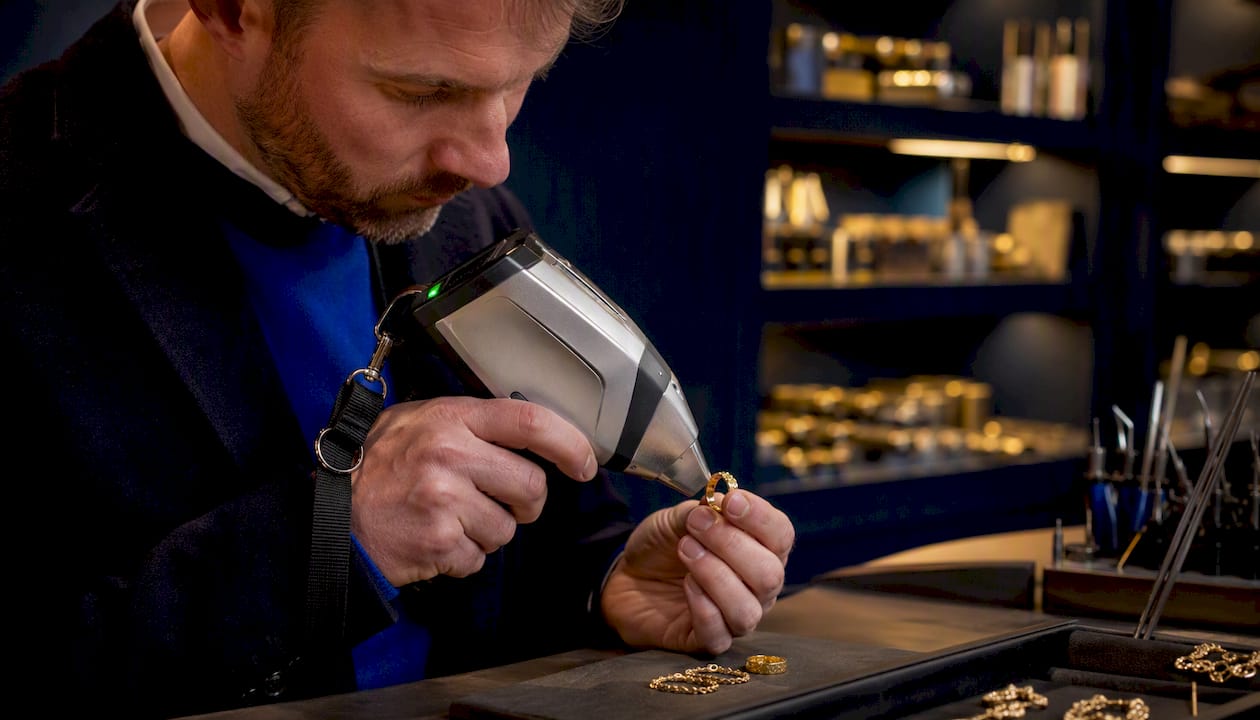
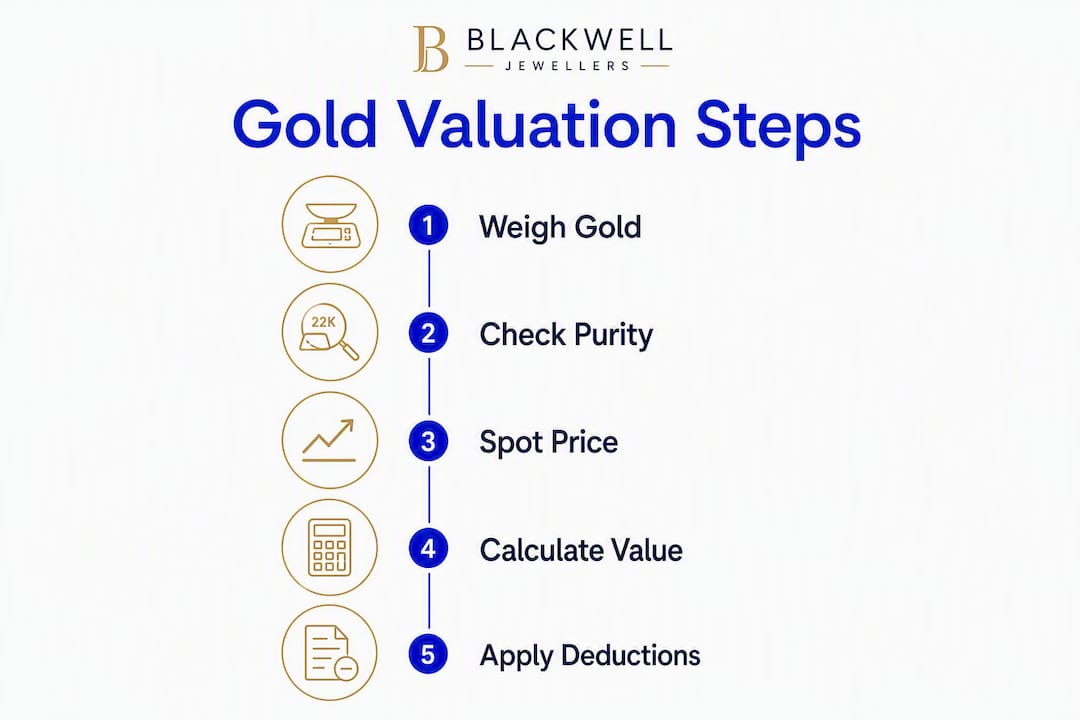
Step 1: Weigh the item. Buyers use precision scales calibrated in grams. Troy ounces (31.1g) are the unit the gold market uses, but most UK buyers quote per gram for clarity.
Step 2: Establish purity. Gold purity is expressed in karats (or carats in the UK). The conversion factors are:
Step 3: Check the LBMA spot price. At the time of any quote, the buyer pulls the current price per troy ounce and converts it to a per-gram figure (divide by 31.1035).
Step 4: Calculate melt value. Multiply weight × purity factor × spot price per gram. A 5g, 18ct ring with gold at £65/g has a melt value of 5 × 0.75 × £65 = £243.75.

Step 5: Apply deductions. This is where the gap between melt value and your cash offer appears. The gap covers refining costs, testing, insurance and business overheads; after all that, many reputable operations net only 2–4% margin. Typical deductions include:
Pro Tip: The NAJ advises that the LBMA spot price changes throughout the trading day, so a quote given in the morning may differ from one given in the afternoon. If you are comparing offers, try to get them on the same day.
Purity, hallmarks and testing: what buyers check before they pay you
A buyer will not just take your word for it that a ring is 18ct. They verify. Here is what that process looks like from your side of the counter.
Hallmarks are the official stamps applied by UK assay offices confirming a piece’s metal content. The four active UK assay offices are London, Birmingham, Edinburgh and Sheffield. The Birmingham Assay Office is one of the busiest and most recognised. The standard UK fineness marks you will see are:
- 375 — = 9ct gold
Under UK law, gold items over 1 gram must be hallmarked before sale. Foreign pieces may carry different marks such as “14K” or “585” without a UK assay office stamp, which is still valid but may prompt additional testing.
Testing methods buyers use:
Warning: if your piece has no hallmark, shows signs of plating (colour wear at edges, a different-coloured base metal showing through), or is a foreign item with unfamiliar marks, expect the buyer to test more thoroughly. Initial offers may be lower until testing confirms purity. Do not take it personally. It is just due diligence.
When a piece is worth more than its weight in gold
Here is something a lot of sellers do not realise: scrap value is the floor, not the ceiling. Auction specialists consistently find that design, maker marks and provenance deliver prices well above melt value for signed or period pieces. Accepting a scrap offer for a Georgian brooch with a maker’s mark is, frankly, a costly mistake.
Attributes that push value above melt:
- High-quality gemstones: — diamonds, rubies, sapphires and emeralds are valued separately from the gold setting. A stone’s value can dwarf the metal content.
When should you seek a specialist valuation rather than a scrap offer? If your piece ticks any of the boxes above, take it to an auction house or specialist dealer first. Many auction houses offer free valuations and consignment services with no obligation to sell.
Pro Tip: Before accepting any offer, photograph the piece clearly (including any marks or stamps), do a quick image search for similar items sold at auction, and check completed listings on major auction platforms. Five minutes of research can tell you whether you are looking at scrap or something considerably more interesting. For more on when jewellery appreciates in value, Blackwelljewellers has a useful guide.
Who you can sell to and how their offers compare
Not all buyers are equal. The route you choose affects both the price you get and how quickly you get paid.
| Buyer type | Typical payout (% of melt) | Speed | Best for | Key watch-outs |
|---|---|---|---|---|
| Specialist gold dealer | 85–90% | 1–3 days | Scrap gold, mixed lots | Check they use XRF testing |
| Reputable high street jeweller | 80–90% | Same day | Mixed pieces, local convenience | Offers vary widely; get written quote |
| Pawnbroker | 70–80% | Same day | Quick cash, option to redeem | Lower end if selling outright |
| Online gold buyer (postal) | 75–80% | 3–7 days | Convenience, no local option | Insurance in transit; holding periods |
| Auction house | Varies (sometimes well above melt for designer/antique; after commission) | Weeks | Designer, antique, gemstone pieces | Commission fees; no guaranteed sale |
| Cash-for-gold shop | 65–80% | Instant | Nothing, frankly | Consistently lowest payouts |
| Refiner (direct) | 85–90% for large quantities | Days to weeks | Large quantities only | Minimum weight thresholds apply |
A few honest observations:
- Cash-for-gold shops on the high street are consistently flagged for low payouts. The convenience is real; the price is not great.
- Online postal buyers are fine for straightforward scrap, but always insure the parcel and confirm the holding period before you post anything.
- Auction houses are brilliant for the right piece and genuinely poor value for plain scrap, once commission is factored in.
- A reputable local jeweller, particularly one with pawnbroking experience, often hits the sweet spot of fair price plus same-day payment.
For a fuller breakdown of selling routes in the UK, Blackwelljewellers covers the pros and cons in detail.
How to prepare your gold and what to ask every buyer
Getting a fair price is partly about the gold and partly about how you show up. A little preparation makes a real difference.
Before you go anywhere:
- Clean pieces gently (warm water, mild soap, soft cloth). Dirt obscures hallmarks.
- Group items by karat if you know them. Mixed lots get averaged down.
- Photograph everything, including any stamps, marks or engravings.
- Weigh items at home if you have kitchen scales (not precise, but gives you a ballpark).
- Calculate your own melt value using a karat calculator before you walk in.
- Gather any original receipts, certificates or provenance documents.
Questions to ask every buyer:
- What testing method do you use, and can I see the result?
- Can you give me an itemised written breakdown of the offer?
- What percentage of melt value does this represent?
- What is your holding period before payment?
- Do you require ID, and what form is acceptable?
- Is this offer valid for today only, or can I come back tomorrow?
Red flags to walk away from:
- Pressure to decide immediately (“this offer expires in five minutes”).
- Refusal to show you the test result or explain the calculation.
- No written breakdown of the offer.
- An offer below 80% of melt value with no explanation of why.
- A buyer who will not confirm their payout percentage upfront.
The NAJ’s guidance is consistent on this: get at least three written quotes. It is the single most effective thing you can do. For more tips on getting the best price, Blackwelljewellers has a practical seller checklist worth bookmarking.
Worked examples: checking whether a quote is fair
Let us make this concrete. Assume the gold spot price is £65 per gram (check live UK rates before you sell).
Example: a 5g, 9ct gold chain
- Melt value: 5 × 0.375 × £65 = £121.88
- At 90%: £109.69
- At 80%: £97.50
- At 70%: £85.31
Example: a 4g, 18ct gold ring
- Melt value: 4 × 0.750 × £65 = £195.00
- At 90%: £175.50
- At 80%: £156.00
- At 70%: £136.50
Worked examples like these show three distinct value types: scrap value (melt minus deductions), resale value (what a jeweller might sell it on for), and auction/collector value (what a signed or period piece might fetch above all of that).
| Buyer type | Likely payout on £195 melt value |
|---|---|
| Specialist dealer | £166–£175 |
| High street jeweller | £156–£175 |
| Pawnbroker (outright sale) | £137–£156 |
| Online postal buyer | £146–£156 |
| Cash-for-gold shop | £127–£156 |
Pro Tip: If your total gold weight is under 5 grams, fixed testing costs eat into the percentage more heavily. A buyer paying 85% of melt on a large lot may effectively pay less on a tiny item once their fixed costs are covered. For very small quantities, a pawnbroker or local jeweller who does not charge separately for testing often gives a better net result.
Tax and timing: what to expect in the UK
Most private sellers of personal gold jewellery pay no tax at all. HMRC treats personal possessions as exempt from Capital Gains Tax up to a certain threshold, and individual pieces of jewellery worth under £6,000 are generally outside CGT scope. If you are selling a collection of high-value pieces, selling regularly as a business, or realising gains on items worth significantly more than you paid, consult HMRC’s guidance directly. The rules are not complicated, but they do depend on your specific circumstances.
Timing by route:
- Same day: high street jewellers, pawnbrokers (cash in hand or bank transfer on the spot).
- 1–7 days: specialist dealers and online postal buyers (testing, holding period, bank transfer).
- Several weeks: auction houses (consignment, cataloguing, sale date, settlement after the auction).
If you are posting gold to an online buyer:
- Insist on fully insured, tracked postage (Royal Mail Special Delivery is the standard).
- Confirm the holding period in writing before you post.
- Ask what happens if you reject their offer (return postage, timeline, condition of return).
This article provides general information, not tax or legal advice. Confirm your position with HMRC or a qualified adviser if you are unsure whether a sale triggers a tax liability.
What a reputable UK jeweller’s valuation process actually looks like
Knowing what a good process looks like helps you spot a bad one. Here is the standard you should expect from any reputable UK jeweller or dealer:
- Visual inspection: checking for hallmarks, condition, signs of plating, repairs or damage.
- Hallmark verification: cross-referencing the fineness mark against known UK and international standards.
- Non-destructive testing: XRF or electronic testing before any acid test is considered.
- Precise weighing: calibrated scales, result shown to you.
- Written offer: itemised, showing weight, purity, spot price used, deductions and final figure.
- ID verification: under anti-money-laundering regulations, legitimate dealers must verify your identity. This is not optional and is not a red flag. It is the law.
- Payment or consignment options: immediate payment by bank transfer or cash (within legal limits), or a consignment arrangement if the piece suits resale.
Trust signals to look for: clear hallmarks on any items they sell, assay office involvement, FGA (Fellow of the Gemmological Association) or DGA (Diamond Graduate of the Gemmological Association) qualifications for valuers, and alignment with NAJ guidance.
Blackwelljewellers follows this process across its Kent stores, with in-house expert jewellers handling authentication and valuation. Over 20 years of trading and a transparent second-hand jewellery channel means the process is documented, not improvised.
Common scams when selling gold and how to avoid them
Selling gold attracts a small but persistent number of bad actors. Here is what to watch for.
The “quick weigh and low offer” trick. A buyer weighs your gold quickly, gives a number, and pressures you to decide on the spot. The number is often calculated on a lower purity than your piece actually is. Always ask to see the test result and the calculation.
Switching items during testing. Rare but real. A less scrupulous buyer takes your piece “to the back” and returns a lower-karat item for testing. Never let your jewellery out of sight during a valuation.
Fake spot prices. Some buyers quote an outdated or artificially low spot price. Check the LBMA price yourself before any appointment.
Unsolicited home buyers. Someone knocks on your door offering to buy gold. Walk away. No legitimate gold buyer operates this way, and you have no recourse if something goes wrong.
Postal scams. You post your gold, receive a low offer, and find it difficult or impossible to get the item returned. Only use established, well-reviewed postal buyers with a clear returns policy in writing.
The “we need to melt it to test it” line. No reputable buyer needs to melt your gold to test it. XRF machines and acid tests work perfectly well on intact pieces. If someone says this, leave.
Haggling is entirely normal and legitimate. Reputable dealers often have small margin flexibility and may improve an offer when you mention you have other quotes. Politely saying “I have a written offer for £X from another buyer” is not rude. It is sensible.
Key takeaways
The single most important thing you can do before selling gold jewellery is calculate your own melt value first, then get at least three written quotes from reputable buyers.
| Point | Details |
|---|---|
| Calculate melt value first | Use weight × purity factor × LBMA spot price to set your baseline before any appointment. |
| Target 85%+ of melt | Reputable specialist dealers pay 85–90% of melt; anything below 80% needs a clear explanation. |
| Separate by karat | Grouping items by purity (9ct, 18ct, etc.) prevents buyers from averaging down mixed lots. |
| Designer or antique pieces need specialist appraisal | Maker marks, provenance and gemstones can push value well above scrap; auction or specialist routes often pay more. |
| Blackwelljewellers offers in-store valuations in Kent | Written quotes, transparent testing and pawnbroking options available across Maidstone, Gravesend and Bexleyheath. |
The mistake most sellers make (and it is an expensive one)
The single most common error? Accepting the first offer. Not because sellers are naive, but because the process feels awkward and most people just want it over with. The buyer is confident, the environment is unfamiliar, and there is a number on the table. It feels easier to say yes.
Here is the thing: that first offer is almost never the best one. Haggling is normal in this trade. Mentioning a competing written quote is not aggressive; it is just how the market works. Reputable dealers expect it.
The second mistake is failing to separate items by karat before you go. A buyer presented with a mixed bag of 9ct and 18ct pieces will often average the lot, which means your 18ct items subsidise the lower-karat ones. Thirty seconds of sorting at home can add meaningful money to your offer.
Third: ignoring provenance. A signed piece, a piece with original receipts, or anything with a documented history is worth more than its melt value to the right buyer. Photograph everything. Keep the paperwork. Even a photograph of the original purchase receipt adds credibility.
Finally: bring your ID. Under anti-money-laundering rules, every legitimate buyer must verify your identity. Forgetting your ID wastes a trip and can delay payment. A passport or driving licence is standard.
Blackwelljewellers: transparent valuations, same day, in Kent
If you want a face-to-face valuation with no pressure and a written offer you can compare against other quotes, Blackwelljewellers is worth a visit. The team across the Kent stores (Maidstone, Gravesend and Bexleyheath) handles pre-owned gold, silver and diamond pieces daily, with in-house testing, precise weighing and clear, itemised offers.

For sellers who are not ready to sell outright, pawnbroking gives you immediate cash against your gold with the option to redeem the piece later. For pieces that might be worth more than scrap, the second-hand jewellery channel offers consignment and resale through a trusted, established platform. And if a piece needs restoration before sale, the repairs team can advise on whether a small investment in the piece increases its resale value.
Walk in, get your written quote, compare it with others. That is all there is to it. Visit any Blackwelljewellers store in Kent or get in touch via blackwelljewellers.co.uk to arrange an appointment.
Useful sources for live prices, hallmarks and official guidance
Before you sell, these are the authoritative places to check your facts:
- LBMA (London Bullion Market Association): the source of the official gold spot price (the “Gold Fix”) used by every reputable UK dealer. Check this before any appointment so you know the day’s baseline.
- NAJ (National Association of Jewellers): consumer guidance on selling jewellery, including advice on getting multiple quotes, what to ask buyers and how to find a reputable valuer. Genuinely useful and free.
- Birmingham Assay Office: for hallmark information, what the marks mean and how to verify a piece’s purity. If you are unsure whether a mark is genuine, this is where to start.
- Live UK scrap gold calculator: — a practical tool for checking per-gram values by karat before you visit a buyer. Use it to sanity-check any offer you receive.
- Blackwelljewellers: for in-person valuations, pawnbroking and second-hand jewellery services across Kent. A local, accountable option when you want a face-to-face process rather than a postal service.
Recommended
- How gold value is calculated when selling: a clear guide – Blackwell Jewellers
- Best Way To Sell Gold Jewellery in the UK (2025 Guide) – blackwellonline
- Top Tips for Getting the Best Price When Selling Your Gold – blackwellonline
- Is now a good time to sell gold jewellery in the UK? – Blackwell Jewellers