
TL;DR:
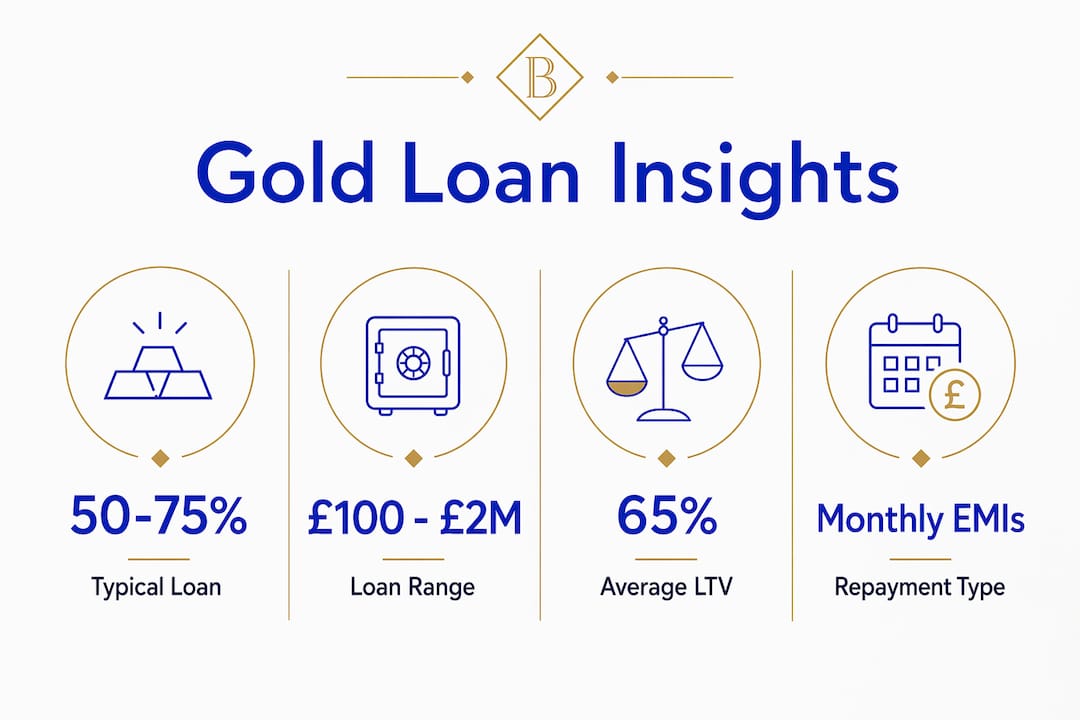
- In the UK, you can typically borrow 50% to 75% of your gold jewellery’s assessed market value. The loan amount depends on the lender type, gold purity, weight, and current market prices, with most loans ranging from £100 to over £2 million.
How much can you typically borrow against gold jewellery in the UK?
Short answer: between 50% and 75% of your gold’s assessed market value. That range sounds simple enough, but where you land within it depends on who you borrow from and what you’re handing over.
Here’s how lenders typically break down:
- Conservative lenders (some high-street pawnbrokers): typically lower loan-to-value (LTV) ratios
- Standard lenders (most established pawnbrokers): moderate LTV ratios
- Specialist asset lenders: higher LTV options
In terms of actual gold jewellery loan amounts, the UK market runs from as little as £100 right up to £2 million or more for serious gold holdings. Most people borrowing against a few rings or a chain are looking at somewhere in the £200–£5,000 bracket, but that figure shifts dramatically with gold purity and weight.
One thing worth knowing upfront: lenders value only the pure gold content. Stones, settings, and decorative metalwork count for nothing in the loan calculation. A diamond-encrusted 18K bracelet might be worth £3,000 at retail, but the lender is only interested in the gold itself.
How is your borrowing amount actually calculated?
The maths behind a gold loan is genuinely straightforward once you know the formula. Lenders assess three things: the weight of your jewellery, its purity in karats, and the current gold spot price. They multiply those together to get the pure gold value, then apply their LTV ratio.
Here’s the gold loan calculation in plain terms:
- Step 1: Weigh your jewellery (in grams)
- Step 2: Calculate pure gold content: weight × (karat ÷ 24)
- Step 3: Multiply pure gold grams by the current gold price per gram
- Step 4: Apply the lender’s LTV ratio (50–75%) to get your loan offer
So a 30-gram, 22K gold chain contains 27.5 grams of pure gold (30 × 22/24). If gold is trading at, say, £65 per gram, that chain’s gold value is £1,787.50. At 70% LTV, you’d be offered around £1,251.
A few other factors influence the final offer:
- Jewellery condition: Well-maintained pieces command better valuations than damaged or heavily worn items
- Jewellery type: Bullion bars and coins attract the highest LTV; jewellery sits slightly lower due to resale complexity
- Current gold market price: Gold prices shift daily, so the same piece can yield a different loan offer week to week
You can check live gold prices at goldprice.org before you walk into any lender. Do your own rough calculation first. It takes five minutes and means you won’t be caught off guard by a low offer.
Pro Tip: Always ask the lender for the total repayment figure in pounds, not just the interest rate percentage. Two loans at the same advertised rate can cost very different amounts depending on how fees and interest are structured.

What interest rates and fees should you expect?
Gold loan interest rates in the UK vary depending on lender and repayment structures, often reflecting differences in cost and terms.
The bigger issue is how that interest gets calculated. There are two methods:
- Flat rate: Interest is charged on the full original loan amount for the entire term, regardless of how much you’ve repaid. Sounds simple, but it’s the more expensive option.
- Reducing balance: Interest is charged only on the outstanding principal. As you repay, the interest base shrinks. On a £1,000 loan at 12%, this method costs roughly half what the flat rate does over the same period.
Beyond interest, watch out for:
- Administration or arrangement fees
- Storage and insurance charges (your gold is held securely, but someone’s paying for that)
- Early repayment fees on some agreements
The lowest advertised interest rate does not guarantee the lowest overall cost. A loan at 10% flat can end up pricier than one at 14% reducing balance, depending on the term and repayment structure. Always compare the total repayment figure in pounds, side by side.
Repayment structures also vary. Regular monthly instalments (EMIs) cost the least in total interest because they chip away at the principal each month. Bullet repayment, where you pay nothing until the end and then settle everything at once, results in the highest total interest because the principal never reduces during the term.
What are the eligibility requirements and how does the process work?
The good news: gold loans are among the least bureaucratic forms of borrowing available in the UK. Most lenders don’t run a credit check, and your income or employment status rarely factors in. The gold does the talking.
Here’s how the process typically unfolds:
- Bring your gold jewellery to the lender for assessment (rings, chains, bracelets, bangles, earrings, and small bullion pieces all qualify)
- Lender assesses purity and weight using professional testing equipment
- Loan offer is calculated based on pure gold value and the lender’s LTV ratio
- You review and sign the loan agreement, confirming the term, interest rate, and repayment structure
- Your jewellery is securely stored by the lender for the duration of the loan
- Funds are released, often within 24–48 hours of agreement
- You repay the loan plus interest, and your jewellery is returned in full
Basic eligibility requirements are minimal:
- You must own the jewellery outright
- You must be 18 or over
- You’ll need valid photo ID (passport or driving licence)
- Some lenders may ask for proof of address
Clean your jewellery before the appraisal. Not because it changes the gold content, but because a well-presented piece signals care and makes the valuation process smoother. If you have any hallmark certificates or original receipts, bring those too.
Choosing a reputable pawnbroker and borrowing responsibly
Not all gold pawn shops are created equal, and the difference between a trustworthy lender and a dodgy one can cost you dearly. Here’s what to look for:
- FCA authorisation or Consumer Credit licence: Any legitimate UK pawnbroker must hold the appropriate regulatory authorisation. Check before you hand anything over.
- Physical premises: A proper shop with a verifiable address is a good sign. Online-only lenders with no physical presence deserve extra scrutiny.
- Transparent terms: Reputable lenders put everything in writing upfront: the loan amount, interest rate, calculation method, fees, and what happens if you can’t repay.
- Professional valuation: Look for lenders who use certified scales and purity testing equipment, not guesswork.
The risks of borrowing against gold jewellery are real and worth understanding before you sign anything:
- Loss of jewellery on default: If you can’t repay, the lender sells your gold. That family heirloom is gone.
- Gold price depreciation: If gold prices fall during your loan term, the lender’s security cushion shrinks, which can affect renewal terms.
- High total interest costs: Short-term gold loans can carry effective annual rates that look alarming when annualised.
Compared to other secured loans, gold jewellery loans offer speed and accessibility that unsecured personal loans or mortgage-backed borrowing simply can’t match. You don’t need a property, a credit history, or weeks of underwriting. The trade-off is that interest rates tend to be higher and terms shorter. For a genuine short-term cash need, that trade-off can make sense. For long-term borrowing, it rarely does.
Pro Tip: Before committing, ask yourself honestly whether you can repay within the agreed term. If there’s any doubt, explore whether selling or pawning gold might serve you better than a loan.
Blackwelljewellers has been operating pawnbroking services from its Kent stores for over 20 years. Every piece brought in for assessment is evaluated by expert jewellers who understand hallmarking, purity testing, and fair valuation. That kind of in-house expertise means you get an honest appraisal, not a lowball offer from someone reading off a chart.
Real borrowing examples by gold weight and purity
Numbers make this concrete. Here’s how borrowing capacity shifts across common jewellery types, using a gold price of £65 per gram and a standard 65% LTV ratio:
| Jewellery | Weight | Purity | Pure gold (g) | Gold value | Loan at 65% LTV |
|---|---|---|---|---|---|
| 9K ring | 5g | — | — | — | — |
| 18K bracelet | — | 75% | — | — | — |
| 22K chain | 30g | — | 27.5g | £1,787.50 | — |
| 24K bangle | 50g | — | — | — | — |
A few things jump out here. The jump from 9K to 18K is dramatic, not just because of purity but because jewellery at 18K and above tends to be heavier. A 22K chain at 30 grams yields a loan of about £1,251 at a 70% LTV. Push that to a specialist lender offering 75% and you’re looking at £1,341 from the same piece.
At 24K, the numbers get serious fast. Fifty grams of 24K gold at 75% LTV would yield around £2,438. If you’re sitting on a collection of high-purity pieces, the borrowing capacity adds up quickly.
Key takeaways
Borrowing against gold jewellery in the UK typically yields 50–75% of your gold’s pure metal value, with loan amounts ranging from £100 to over £2 million depending on your holdings and lender.
| Point | Details |
|---|---|
| LTV ratio drives your offer | Conservative lenders offer 50–60%, standard lenders 60–70%, and specialists up to 75% of pure gold value. |
| Pure gold weight is what counts | Stones and settings are excluded; calculate weight × (karat ÷ 24) to find your lendable gold content. |
| Interest method matters more than rate | Reducing balance costs roughly half what flat rate does; always compare total repayment in pounds. |
| Loan approval is fast | Most gold loans complete within 24–48 hours with minimal credit checks required. |
| Default means losing your jewellery | Understand the repayment terms fully before signing, especially for sentimental or high-value pieces. |

Blackwelljewellers offers pawnbroking services from its Kent stores in Maidstone, Gravesend, and Bexleyheath, with expert in-house valuations on gold jewellery of all purities. Every appraisal is carried out by qualified jewellers who know the difference between a hallmarked 22K chain and a gold-plated imitation. If you want a straight answer on what your gold is worth and what you could borrow against it, that’s exactly what Blackwelljewellers provides. Browse the second-hand jewellery collection online to see the standard of pieces the team works with every day.
Recommended
- How to get cash lent on jewellery responsibly in 2026 – blackwellonline
- How much can you get for pawning jewellery in the UK? – Blackwell Jewellers
- Top 3 Pawnbrokers in Gravesend How to Borrow Against Gold Jewellery 20 – Blackwell Jewellers
- What jewellery can you pawn for a short-term loan? – Blackwell Jewellers