

A jewellery valuation certificate is a signed, dated document from a qualified valuer stating what a piece is worth for a specific purpose, usually insurance replacement, probate or resale. You need one if you’re insuring anything of real value, sorting an estate, or selling something worth more than a passing guess. Look for IRV or NAJ credentials on the paperwork before you trust it.
TL;DR:
- A valid UK jewellery valuation certificate must include detailed descriptions, clear photographs, gemstone specifics, and the valuer’s verified credentials such as IRV or NAJ membership.
- Only qualified members of professional societies like IRV or gemological qualifications from GIA or Gem-A should prepare legally robust valuations, avoiding handwritten or photo-only reports.
- Proper valuation involves a comprehensive physical inspection, gemstone testing, market research, and documentation, with valuations typically costing £50 to £125 per item.
- Revaluation every three years is recommended to ensure insurance coverage matches current market values, especially after significant gold or diamond price changes.
- When using valuations for insurance, probate, or resale, confirm the insurer’s acceptance, keep original documents, and understand that replacement value differs from realisable or auction prices.
Table of Contents
- What a valid UK jewellery valuation certificate should contain
- Who can prepare an authoritative certificate in the UK
- How a professional jewellery valuation is carried out
- Costs, timing and how often to revalue
- How to get a legally robust certificate in the UK
- Using your certificate with insurers, probate and buyers
- How Blackwell Jewellers carries out valuations
- Three quick fixes to avoid certificate problems
- Blackwell Jewellers: how we help with valuation, repairs and second-hand services
- Key trade bodies and guidance
- Sources
What a valid UK jewellery valuation certificate should contain
Here’s the thing nobody tells you until you’re mid insurance claim, arguing with an adjuster over a ring you can’t quite prove existed: a photo on your phone and a receipt from 2011 won’t cut it. A proper certificate is a legal document, not a nice PDF.
At minimum, it should include:
- A full item description, including hallmarks and precise measurements
- Multi-angle photographs sharp enough to show detail
- Weight, dimensions and metal purity
- Gemstone details, including the 4Cs where relevant (cut, colour, clarity, carat)
- The valuer’s printed name, signature (hand or electronic) and their IRV membership number where applicable
- The date of valuation and a clear statement of purpose and basis (new for old, open market, or second hand)
- Explanatory notes and limiting conditions explaining how the figure was reached
That last point matters more than it sounds. A good valuation report tells the reader exactly what the valuer did and why, so nobody’s left guessing when a claim gets scrutinised.
Who can prepare an authoritative certificate in the UK
Not every jeweller with a loupe and a laptop is qualified to sign a certificate an insurer will actually honour. The credentials matter, and checking them takes about two minutes.
Membership of the Institute of Registered Valuers (IRV), under the National Association of Jewellers (NAJ), is the benchmark. IRV valuers follow a formal Code of Practice and each carries a unique IRV number you can ask to see and verify.
Beyond IRV, look for:
- Gemmological qualifications from Gem-A or the GIA, particularly for coloured stones or unusual cuts
- JVA affiliation, useful for antique or period pieces where provenance research is involved
- A specialist valuer for anything unusual, a Victorian mourning brooch is not priced the same way as a modern solitaire
Red flags worth walking away from: a handwritten schedule, a valuation done purely from photographs, or a document with no visible signature. If a valuer won’t put their name and number to it, don’t put your trust in it either.
How a professional jewellery valuation is carried out
A proper valuation follows a set sequence, and it’s worth knowing what should happen at your appointment so you can spot a rushed job.
- Physical inspection under magnification. The valuer examines the piece directly, checking hallmarks, wear, and hidden damage a photo would never reveal.
- Metal and gemstone testing. Purity gets confirmed, stones get assessed against the 4Cs where relevant.
- Professional photography. Multiple angles, properly lit, becomes part of the permanent record.
- Market replacement research. The valuer checks current prices to land on a defensible figure, not a guess.
Valuers keep working notes behind every certificate, partly for their own accountability and partly because insurers or solicitors sometimes come back with questions years later.
Pro Tip: Steer clear of any service offering a valuation from photos alone. A qualified valuer must physically examine your item at the date of valuation, because images can’t confirm hallmarks or reveal damage hidden under a claw or clasp.
Costs, timing and how often to revalue
Prices vary more than most people expect, largely because complexity drives cost far more than carat weight does.
- Typical UK fees run roughly £50 to £125 per item, depending on how much research the gemstones or provenance demand
- Many valuers reduce the per-item rate when you bring several pieces at once
- Simple items often turn around within days; complex reports with unusual stones or antique provenance can take longer
- Valuation days offer a faster, lower-cost route for straightforward pieces
The commonly recommended interval is revaluation every three years, sooner if gold or diamond prices have moved sharply. An insurer holding a five-year-old figure on a ring that’s since jumped in value is a recipe for under-insurance, which only surfaces at the worst possible moment: during a claim.
How to get a legally robust certificate in the UK
Getting this right is mostly about asking the right questions before you hand anything over, not after.
- Choose your route. NAJ or IRV-registered valuers, retail jewellers offering in-house valuation services, or dedicated valuation day events all work, provided the credentials check out.
- Bring your paperwork. Original receipts, any lab reports (GIA or similar), and previous valuations all help the valuer work faster and more accurately.
- Ask before you book. Confirm the basis of value they’ll use, their IRV membership status, expected turnaround, and the fee structure upfront.
- Insist on security. Any reputable valuer offers insured custody while your item is in their hands, and issues a digital PDF with photographs you can store and share instantly.
Blackwelljewellers’s inspection workflow follows this same structure for every piece that passes through its stores, whether it’s heading for sale or simply being valued.
Using your certificate with insurers, probate and buyers
The certificate itself is only half the job. How you use it decides whether it actually works when you need it to.
- Ask your insurer whether they’ll formally admit the valuation in advance, this single step prevents most disputes before they start
- For probate, confirm the report states open market value where HMRC requires it, and keep the valuer’s contact details on file for follow-up queries
- For resale, understand that replacement value (what an insurer pays) is not the same figure as open-market or realisable value (what a buyer will actually pay)
Confusing those two figures is one of the most common, and costly, mistakes owners make. A £4,000 insurance replacement valuation on a ring tells you nothing about what it would fetch at auction or in a private sale, a distinction worth understanding before you sell gold jewellery rather than insure it.
How Blackwell Jewellers carries out valuations
Every piece that comes through Blackwelljewellers’s Kent stores or online platform goes through the same disciplined process before any certificate gets issued.
- In-house inspection, authentication and hallmark verification, carried out by jewellers trained to spot the details that matter
- Restoration assessment where a piece needs work before its true condition and value can be confirmed
- Documents issued in formats aligned with IRV and NAJ expectations, typed, signed and photographed
- Insured custody for anything left in-store, with proper record retention if you ever need a certificate reissued
Twenty years of trading across Maidstone, Gravesend and Bexheath has taught the team that a rushed valuation is worse than no valuation at all, it just gives you false confidence.
Three quick fixes to avoid certificate problems
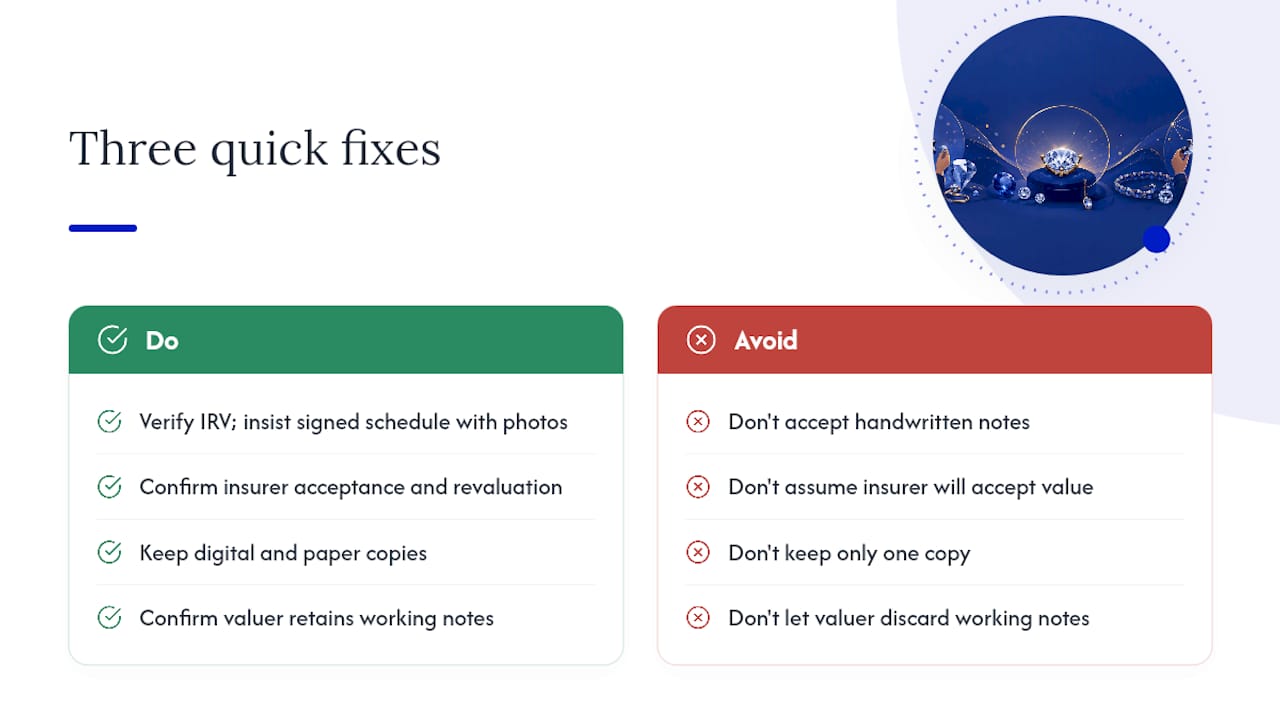
Most valuation disputes trace back to one of three avoidable mistakes. First, check the valuer’s IRV membership and insist on a typed, signed schedule with photographs, not a handwritten note scribbled on headed paper.
Second, ring your insurer and ask whether they’ll admit the value now, and whether they expect revaluation at set intervals. Third, keep both digital and paper copies, and confirm your valuer retains working notes. That last habit has saved more claims than people realise.
— James
Blackwell Jewellers: how we help with valuation, repairs and second-hand services
Compared with sending items away to an unnamed valuation service and waiting weeks for a report, Blackwelljewellers offers face-to-face valuation appointments across its Kent stores, with fixed-fee options and reduced rates when you bring multiple pieces at once.

Items left for inspection sit under insured custody the entire time, and every certificate issued follows the same IRV-aligned format covered above: typed, photographed, signed. If a valuation uncovers a loose claw or worn shank, Blackwelljewellers’s jewellery repair service sits under the same roof, so you’re not shuttled between businesses to sort it. If you’re weighing up resale instead, browse the second-hand collection to see how authenticated pieces are priced and presented before you decide. Book a valuation appointment at your nearest Kent store or through the online enquiry form to get started.
Key trade bodies and guidance
- NAJ Code of Practice for MIRVs and FIRVs
- NAJ Valuation Guidance Note
- T H March insurance guidance
- Age UK: getting jewellery valued for insurance
Sources
- NAJ — Valuation guidance note v2
- NAJ — Code of Practice for MIRVs and FIRVs (2023)
- T H March — submit valuation documents
- JewelleryValue — jewellery valuation certificate guidance