

A ring shank replacement, or re-shanking, removes the worn or damaged section of your ring’s band and replaces it with fresh metal matched to the original alloy. If your ring is cracking, paper-thin at the bottom, or wobbling on your finger, stop wearing it now. The risk of losing a stone, or the ring itself, is real.
Here’s what to do immediately:
- Photograph the ring from every angle, including close-ups of any thin or cracked areas
- Note any hallmarks (usually stamped inside the band) before sending it anywhere
- Book an inspection or request a postal assessment from a reputable UK jeweller
In the UK, a standard half shank repair typically takes a couple of weeks, with starting prices for sterling silver repairs being affordable and higher prices applying for platinum repairs. Most reputable jewellers offer a workmanship guarantee on completed repairs.
Pro Tip: Don’t attempt to bend a cracked shank back into shape yourself. You’ll accelerate the fracture and potentially dislodge any set stones.
Key takeaways
A ring shank replacement restores structural integrity by removing worn metal and replacing it with matched alloy, and the right repair type depends on how much of the band is compromised.
| Point | Details |
|---|---|
| Stop wearing if unsafe | Visible cracks or extreme thinning mean the ring should come off immediately. |
| Photograph and document | Note hallmarks and photograph all angles before sending the ring anywhere. |
| Match the repair to the damage | Quarter, half, and full shank repairs each suit different levels of wear. |
| Cost depends on metal and complexity | Platinum and 18ct gold cost significantly more than silver; pavé settings add to the price. |
| Blackwelljewellers offers in-house reshank repairs | In-store and postal options available, with written estimates and a workmanship guarantee. |
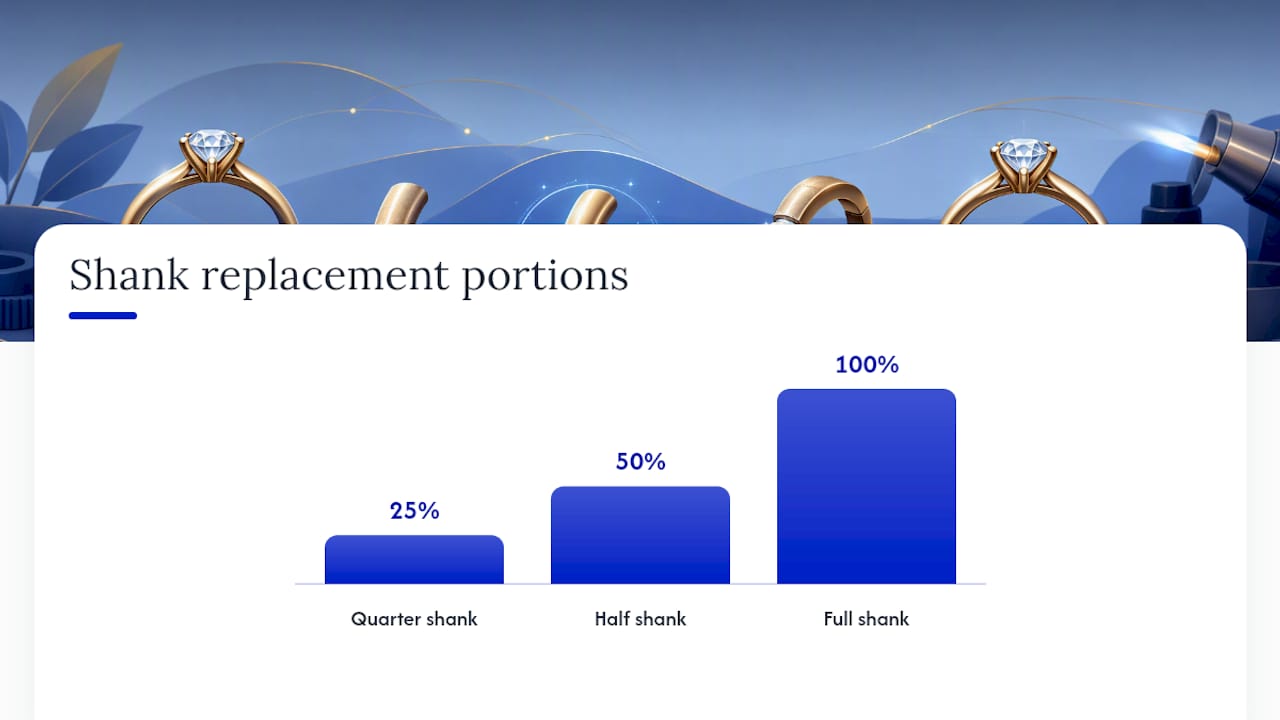
Table of Contents
- What is the shank, and what does re-shanking actually mean?
- How do you know if your ring needs a shank repair?
- What types of shank repair do UK jewellers offer?
- What does the repair process look like, and how long does it take?
- What affects the price, and what are typical UK ranges?
- Why do metal matching and hallmarking matter so much?
- When is repair the wrong answer?
- How do you choose the right jeweller for a reshank?
- How Blackwelljewellers handles ring shank replacement
- A note from the workshop
- Arrange your repair with Blackwelljewellers
- Sources
What is the shank, and what does re-shanking actually mean?
The shank is the hoop of metal that encircles your finger. It’s the structural backbone of the ring. The anatomy of a ring also includes the shoulders (the sides that rise toward the stone), the head or setting (which holds the stone), and the sizing area at the base of the band where most wear concentrates.
Re-shanking means a jeweller cuts away the compromised metal and replaces it with new ring stock matched to your original alloy. Depending on how much of the band is worn, this might be a small patch, a half-band replacement, or a complete new hoop. The jeweller can also add or remove metal during sizing, which is why the base of the shank is often the first place to show wear.
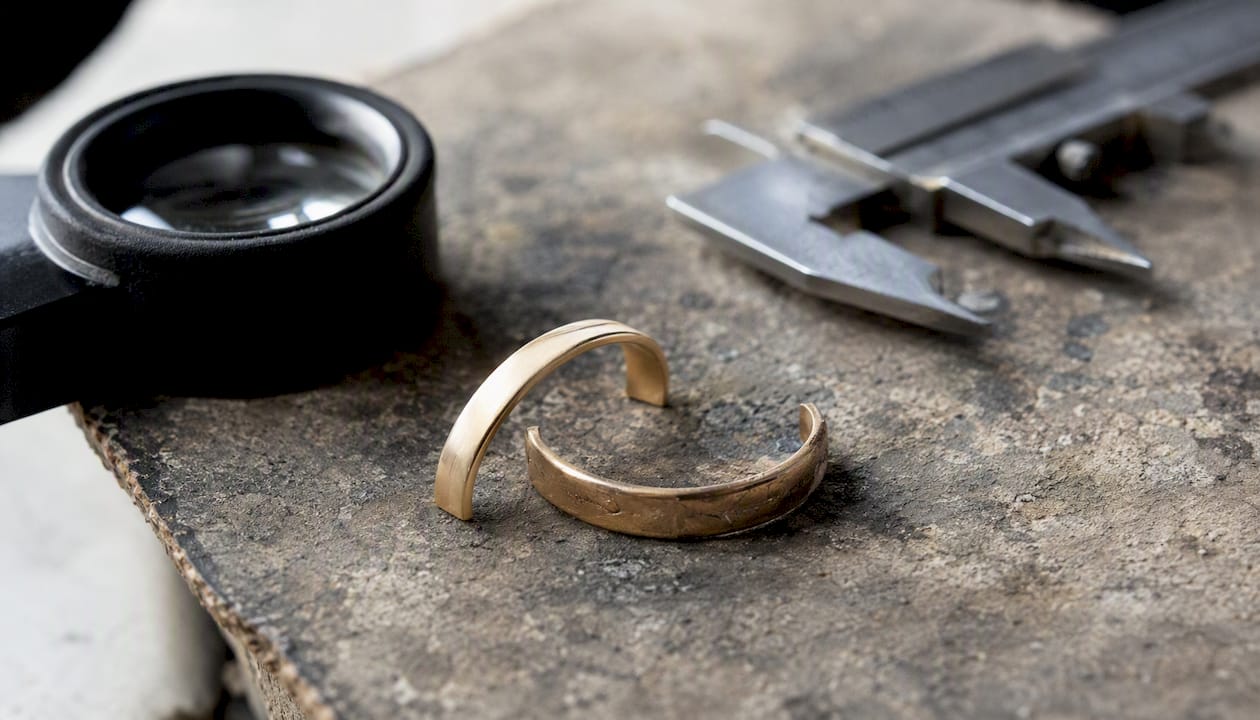
Why does it wear there? Friction. Every time you wash your hands, grip something, or knock the ring against a surface, the bottom of the band takes the hit. Thin original designs, repeated resizing, and manual work all speed up the process.
For a deeper look at ring anatomy and how it affects durability, the Stuller bench resource on ring parts is worth a read.
How do you know if your ring needs a shank repair?
Honestly, some of these signs are obvious. Others are sneaky. Here’s what to look for:
- Thinning at the base (“waistlining”): Hold the ring up to the light. If the bottom looks noticeably thinner than the sides, it’s wearing down.
- Hairline cracks: Tiny fractures, often visible only under magnification or in bright light.
- Sharp or rough edges: A worn shank can develop a blade-like edge that catches on fabric.
- A pinging or ringing sound: Tap the band gently. A dull thud is fine; a high-pitched ring can indicate a crack.
- Wobble or uneven fit: If the ring twists or sits lopsided, the band may have deformed.
- Visible solder seams from previous resizing: Multiple old seams are a warning that the metal has been worked repeatedly and may be weakened.
Degrees of urgency matter here. A ring that’s thinning but structurally sound can be monitored for a few weeks while you arrange a repair. A ring with a visible crack or a stone that moves? Take it off today and get it seen. For a fuller breakdown of warning signs, 5 signs your ring needs repair covers the most common ones.
Pro Tip: Rotate the ring to the 3 o’clock and 9 o’clock positions and look at the inner surface under a bright light or a phone torch. These are the spots where internal weakness tends to hide, well before a crack becomes visible from the outside.
What types of shank repair do UK jewellers offer?
Not every worn ring needs a full rebuild. The repair type depends on how much of the band is compromised.
-
Quarter shank repair: A small patch of new metal is soldered over or into a localised worn area. Suitable when damage is confined to a small section and the rest of the band is structurally sound. It’s the least invasive option, but it’s only appropriate when the surrounding metal is genuinely healthy.
-
Half shank replacement: The most common repair for worn engagement rings and wedding bands. The jeweller removes the bottom half of the band (cutting at roughly the 3 o’clock and 9 o’clock positions) and replaces it with a new formed piece of matching metal. The join is welded or soldered, then finished to blend invisibly. This is the sweet spot for most worn rings.
-
Full shank replacement: When damage extends around most or all of the band, or when the ring has been resized so many times that the geometry is compromised, a full replacement makes more sense than patching. The head and setting are retained; the entire hoop is replaced.
-
Reinforcement or overlay: A thin layer of metal is added over the worn area rather than removing it. This can work as a short-term fix, but it doesn’t address underlying weakness and may fail sooner than a proper re-shank. Most experienced jewellers will steer you away from this unless circumstances genuinely call for it.
A few terms you’ll hear from a jeweller: ring stock (the pre-formed metal used to build the new shank), laser welding (a precise, low-heat joining method), soldering (the traditional torch-based method), and re-hallmarking (updating the legal mark after significant metal changes).
What does the repair process look like, and how long does it take?
Here’s the sequence, from drop-off to collection:
- Assessment: The jeweller examines the ring, checks stone security, measures the shank thickness, and confirms the metal type and karat.
- Metal matching: New ring stock is selected to match the original alloy as closely as possible (9ct yellow gold to 9ct yellow gold, platinum to platinum, and so on).
- Removal of worn metal: The damaged section is cut away, typically at the 3 o’clock and 9 o’clock positions for a half reshank.
- Forming the new shank: The replacement stock is shaped to match the ring’s profile and size.
- Welding or soldering: Laser welding is often preferred near heat-sensitive stones because it concentrates heat precisely and reduces the risk of damage to settings. Traditional torch soldering is used where heat sensitivity is less of a concern.
- Finishing and polishing: The join is filed, sanded, and polished to match the original surface finish.
- Final inspection: Stone security is checked again, sizing is confirmed, and the ring is cleaned.
For a practical look at the tools and sequence involved in repairing a thin shank, the Ganoksin video tutorial is one of the clearest available.
Typical UK turnaround times:
- Standard half shank (silver or 9ct gold): 5–10 working days
- Full shank or complex work (18ct gold, platinum): 10–15 working days
- Vintage or antique pieces with fragile settings: allow 3–4 weeks
For postal repairs, use a tracked and insured service (Royal Mail Special Delivery is the standard recommendation for valuable items in the UK). Pack the ring in a small rigid box inside a padded envelope. A step-by-step guide to sending your ring for repair covers the logistics in detail.
Before the ring is returned, a reputable jeweller should check hallmarks, apply rhodium plating if it’s white gold, tighten any loose stones, and issue a written guarantee on the workmanship.
What affects the price, and what are typical UK ranges?
Ring shank repair cost varies more than most people expect. Here are the main drivers:
- Metal type and karat: Platinum costs significantly more than gold in both material and labour terms. 18ct gold costs more than 9ct. Sterling silver is the most affordable.
- Extent of work: A quarter shank patch uses less metal and less time than a full replacement.
- Set stones: Pavé, channel-set, or flush-set stones near the shank require extra care and time, which adds to the cost.
- Engraving and finishing: Reproducing an engraved pattern or a brushed finish takes longer than a plain polish.
- Hallmarking: If the repair changes the metal weight significantly, UK law may require re-hallmarking through an Assay Office, which carries a small additional fee.
Jewellers typically quote on a combination of labour and metal cost. If the old metal is melted down and reused, some workshops will apply a scrap credit against the new material cost.
Indicative UK price-from ranges (starting prices only, not fixed quotes):
These are conservative starting figures for plain bands without set stones. Pavé settings, complex profiles, or engraving will push costs higher. A half shank repair is generally more affordable than a full replacement because it uses less metal and labour, though the final cost always depends on the specific ring.
Why do metal matching and hallmarking matter so much?
Get the alloy wrong and you’ll see it. Mismatched white gold, for instance, can oxidise at a different rate to the original metal, leaving a visible seam within months. Worse, different alloys have different hardness ratings, so a softer patch in a harder band creates a stress point that will fail faster than the original wear did.
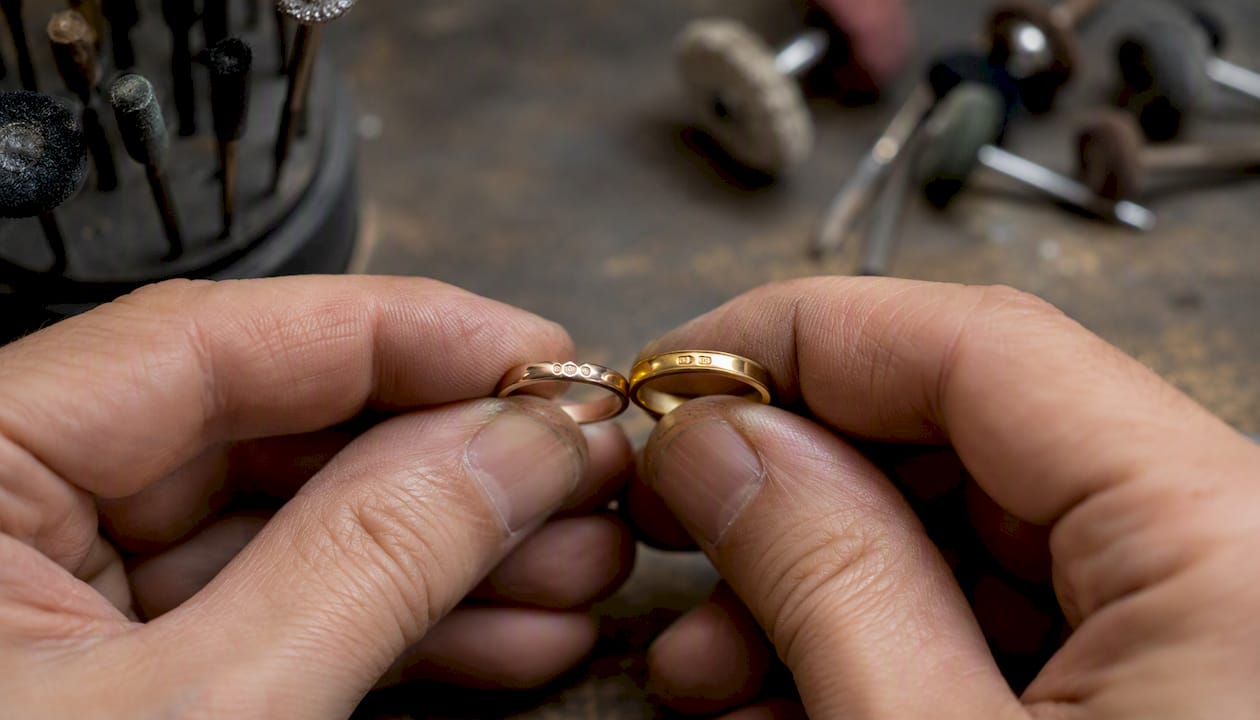
Shank width, profile, and material all affect how a ring wears over time. A jeweller replacing a 3 mm comfort-fit shank should match both the width and the profile, not just the karat.
On hallmarking: in the UK, any article of precious metal above a certain weight threshold must be hallmarked before sale. When a repair significantly alters the metal content of a ring, the Assay Office may need to mark the alteration. A reputable jeweller will advise you on this upfront, not as an afterthought.
For white gold rings, rhodium plating is almost always recommended after a reshank. The repair process can strip existing plating, leaving the new section looking slightly different in colour. A fresh rhodium coat over the whole ring brings everything back to a uniform bright white.
Pro Tip: If your ring has a vintage brushed or satin finish, ask the jeweller to show you a sample of matched metal before work begins. Reproducing a non-standard finish takes skill, and not every workshop has the right tools for it.
When is repair the wrong answer?
Sometimes re-shanking isn’t the right call. Here’s when to think twice:
- Extensive multi-point thinning: If the metal is paper-thin all the way around, a patch or even a half shank will leave you with a weak junction between old and new metal. A full replacement is the only sensible option, and even then the jeweller needs to assess whether the setting can survive the process.
- Fragile antique settings: Certain flush, gypsy, or pavé settings in antique rings are so delicate that removing the shank risks dislodging or cracking stones. In these cases, a vintage ring restoration specialist may recommend a protective sleeve or a bespoke new band that keeps the original head entirely untouched.
- Repeated previous resizings: A ring that’s been resized four or five times may have compromised geometry throughout the band, not just at the base. Patching it again creates another weak seam in an already stressed structure.
- Catastrophic breakage: If the shank has snapped completely and the break is jagged or multi-point, a full replacement is almost always the better long-term solution.
For heirlooms and historically significant pieces, when to replace the entire shank is worth reading before you commit to any repair approach.
How do you choose the right jeweller for a reshank?
This is where people go wrong. They hand over a sentimental ring to the nearest high-street shop without asking a single question. Don’t do that.
Here’s what to ask before you hand anything over:
- Do you have examples of previous reshank work? Photos or before-and-after shots are a reasonable request.
- Do you use laser welding? Not always necessary, but it’s a sign of a well-equipped workshop.
- Where does your replacement ring stock come from, and how do you match the alloy? Vague answers here are a red flag.
- What’s the turnaround estimate, and is it in writing?
- Is the ring insured while it’s in your care?
- Do you offer a workmanship guarantee, and for how long?
- Will you advise on re-hallmarking if the repair requires it?
Red flags to watch for: no written estimate, refusal to check stone security before starting work, or a jeweller who can’t explain how they’ll match the alloy. These aren’t pedantic questions. They’re the difference between a repair that lasts a decade and one that fails in six months.
On completion, ask for before-and-after photographs, written documentation of any changes to metal weight or hallmarks, and a written guarantee. A good jeweller won’t hesitate.
Pro Tip: Ask specifically whether they’ll tighten all stones as part of the repair, not just the ones near the shank. Heat and vibration from welding can affect settings elsewhere on the ring.
For more guidance on finding quality ring repair services in the UK, Blackwelljewellers has a practical breakdown of what to look for.
How Blackwelljewellers handles ring shank replacement
Blackwelljewellers is a family-run business with over 20 years of trading across Kent, with stores in Maidstone, Gravesend, and Bexleyheath, plus a national postal repair service. Reshanking is handled in-house by experienced jewellers, not sent out to a third-party workshop.
The workflow at Blackwelljewellers:
- Full assessment of the ring on arrival, including stone security checks and hallmark documentation
- Alloy matching to the original metal (karat, colour, and profile)
- Laser welding where appropriate, particularly for rings with heat-sensitive stones or delicate settings
- Finishing to match the original surface, whether polished, brushed, or rhodium-plated
- Final inspection before return, including stone tightening and a written workmanship guarantee
Turnaround for standard repairs is typically 1–2 weeks. Complex or antique pieces are assessed individually. Both in-store drop-off and insured postal repairs are accepted. Price-from estimates are provided upfront, in writing, before any work begins.
To arrange an inspection or request a quote, visit the jewellery repairs page.
A note from the workshop
Most reshank jobs that come through the door at Blackwelljewellers follow the same pattern: a ring that’s been worn daily for ten or fifteen years, thinned gradually at the base, and finally cracked or deformed at the point where it was resized years ago. The owner usually knew something was wrong for months but kept wearing it. By the time it arrives, the repair is more complex than it needed to be.
The honest truth is that catching it early, when there’s still enough metal to work with and the stones are secure, makes every part of the job easier and cheaper. Alloy matching, hallmark preservation, and finish reproduction are all more straightforward when the jeweller isn’t working around a catastrophic break.
At Blackwelljewellers, the commitment is to match the original design as closely as possible, advise on hallmarking honestly, and never start work without a written estimate the customer has agreed to. That’s not a marketing line. It’s just how a workshop that’s been doing this for over two decades operates.
Arrange your repair with Blackwelljewellers
Worn shank, cracked band, or a ring that’s been resized one too many times? Blackwelljewellers offers in-house reshank repairs with matched alloys, laser welding where appropriate, and a written workmanship guarantee on every job.

Here’s how to get started:
- Photograph the ring clearly, note any hallmarks, and describe the problem in as much detail as you can.
- Contact Blackwelljewellers to request a written estimate before any work begins.
- Choose in-store drop-off at Maidstone, Gravesend, or Bexleyheath, or use the insured postal repair service.
- Agree the scope, turnaround, and price in writing before the ring leaves your hands.
On completion, you receive before-and-after documentation, confirmation of any hallmark changes, and a written guarantee on the workmanship. Visit the jewellery repairs page to request a quote or find out more about drop-off and postal options.
Sources
- Anatomy of a ring : The different parts of a ring and what to look for in each : Arden Jewelers
- Ring shanks (glossary) — Muau blog
- Parts of a ring — essential basics of jewellery design (Stuller benchjeweler)
- How to Repair a Thin Ring Shank — Ganoksin video tutorial
- How we reshank rings — Seattle Jewelry Design and Repair