

TL;DR:
- Selling gold jewelry in Kent requires verifying hallmark marks to determine purity and obtaining multiple quotes to maximize the payout.
- Buyers focus on melt value based on gold content and current spot prices, not sentimental or retail value.
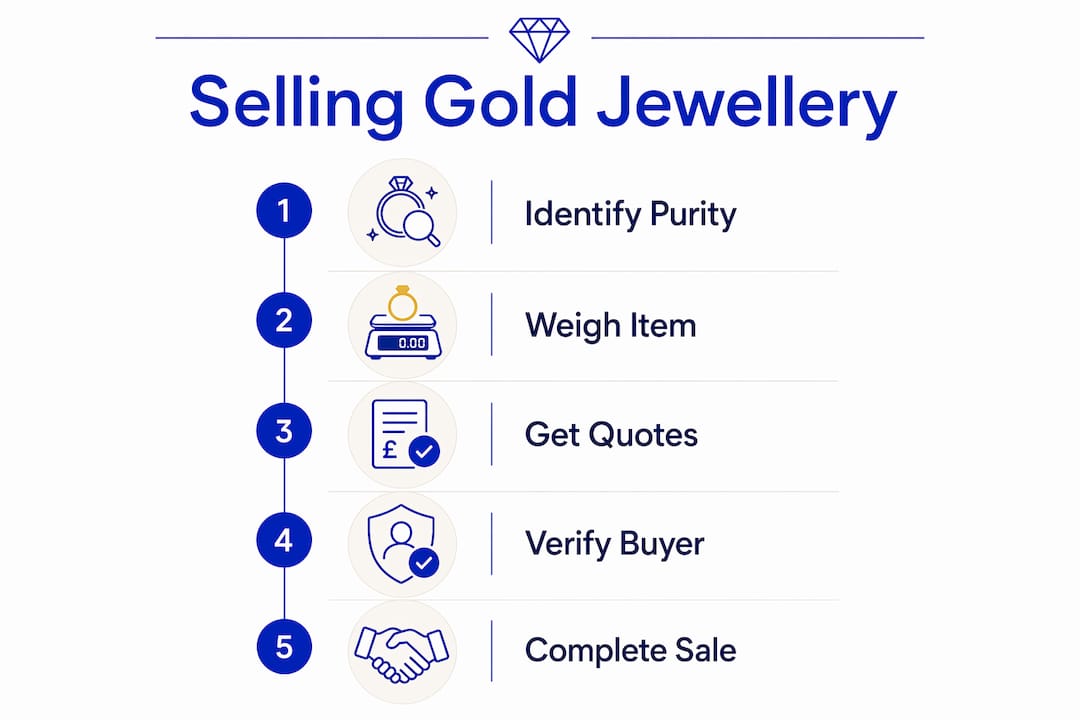
Selling gold jewellery in Kent is defined as the process of exchanging pre-owned gold items for cash or credit through a verified buyer, based on the item’s purity, weight, and current gold market value. The UK hallmarking system, governed by the Hallmarking Act 1973 and overseen by the British Hallmarking Council, is the legal backbone of every honest gold transaction in this country. Understanding hallmark marks such as 375 (9ct), 585 (14ct), 750 (18ct), and 916 (22ct) tells you exactly what your gold is worth before you walk through any door. Blackwelljewellers, with over 20 years of trading across Kent including stores in Maidstone, Gravesend, and Bexleyheath, offers transparent valuations grounded in these exact standards. This guide covers the full gold jewellery selling process, from reading your hallmarks to collecting your payment safely.
How to identify the purity and hallmark of your gold jewellery
UK hallmarking dates back to 1478 and remains the most trusted legal indicator of gold authenticity and purity available to British consumers. That is not a trivial fact. It means the tiny stamp on your ring or chain carries centuries of legal weight behind it.
Hallmarks appear in different locations depending on the piece:
- Rings: inside the shank (the band that circles your finger)
- Chains and bracelets: on the clasp or a small attached tag
- Earrings: on the post or butterfly fitting
- Pendants: on the bail (the loop that connects to the chain)
The fineness number is the one you care about most. A stamp reading 375 means 37.5% pure gold (9ct). A stamp reading 750 means 75% pure gold (18ct). The higher the number, the more gold content, and the higher the melt value.
Here is the catch: hallmark stamps are tiny, typically 0.5–2mm, and require at least 10x magnification to read correctly. Trying to read them with the naked eye is how misidentification happens. A jeweller’s loupe is the right tool. You can pick one up for a few pounds online, and it will save you from accepting a quote based on the wrong carat.
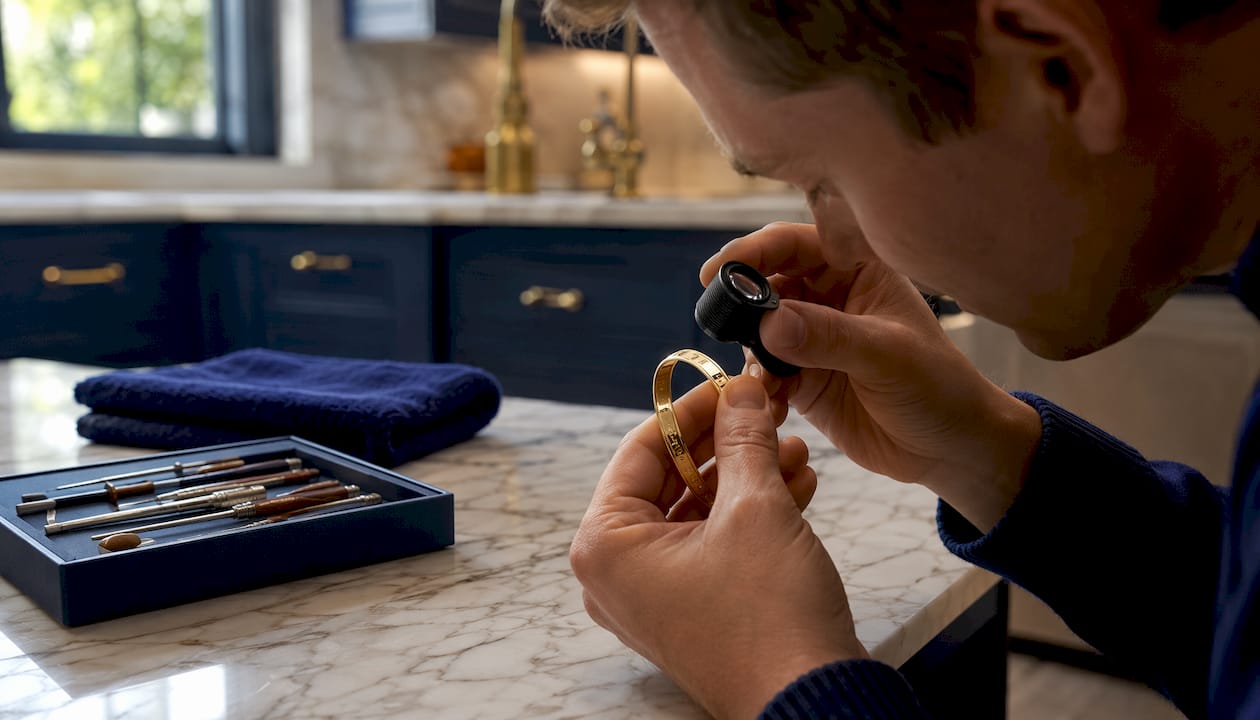
Foreign hallmarks are a different matter entirely. European pieces often carry different stamp systems, and some older or imported items carry no UK hallmark at all. Gold jewellery over 1 gram must legally be hallmarked by a UK assay office before sale. Items under 1 gram, very old pieces, or foreign jewellery may lack a UK stamp and will require acid testing or XRF (X-ray fluorescence) testing by a professional to confirm purity. If you are unsure whether your piece is genuine, Blackwelljewellers has a useful guide on spotting fake gold jewellery that walks you through the checks.
Pro Tip: Before visiting any buyer, photograph your hallmarks under a bright light with your phone camera zoomed in. This gives you a reference point and prevents any dispute about what purity was agreed upon.
How to weigh and value your gold jewellery before selling
Most sellers walk in expecting retail prices and walk out confused. The reality is that buyers focus on melt value, not what you paid in a shop years ago. Melt value is the intrinsic worth of the gold content based on weight and purity at the current spot price. Craftsmanship, sentimental value, and original purchase price are irrelevant to this calculation.
Here is how to work out a rough baseline before you go anywhere:
- Separate your jewellery by carat. Never mix 9ct and 18ct pieces on the same scale. Different purities have different values per gram, and mixing them creates pricing errors that always favour the buyer, not you.
- Weigh each group in grams. A digital kitchen scale works for a rough figure, but a jewellery scale accurate to 0.01g is far better. Weigh each piece individually if possible.
- Find the current gold spot price. The London Bullion Market Association (LBMA) publishes the gold price daily in troy ounces. Convert to grams (1 troy ounce = 31.1g) for your calculation.
- Calculate the gold content. Multiply the weight by the purity percentage. A 5g ring at 18ct (75% pure) contains 3.75g of pure gold.
- Apply the buyer’s payout rate. Reputable buyers typically pay 80–95% of the melt value. This margin covers their refining costs and profit.
| Carat | Fineness mark | Gold purity | Typical use |
|---|---|---|---|
| 9ct | 375 | 37.5% | Most UK everyday jewellery |
| 14ct | 585 | 58.5% | European and US pieces |
| 18ct | 750 | 75% | Fine jewellery, engagement rings |
| 22ct | 916 | 91.6% | Asian gold, wedding jewellery |
Understanding scrap value versus retail value is the single biggest mindset shift you need to make. Unless your piece is a signed designer item or a genuine antique with provenance, the offer you receive will be based on gold content alone. Vintage or designer pieces can attract a premium, and it is worth reading up on collecting vintage jewellery before assuming your grandmother’s brooch is only worth its weight.
Where and how to get trustworthy quotes from Kent gold buyers
Price quotes from different buyers can vary by 20% or more, which on a £500 lot of gold is a £100 difference. That is not small change. Getting 3–5 quotes before committing is the single most effective thing you can do to maximise what you receive.
Kent has a range of buyer types, each with different strengths:
- Specialist gold dealers: Tend to offer the most competitive rates because gold buying is their core business.
- Pawnbrokers: Offer immediate cash and are regulated under the Consumer Credit Act. Blackwelljewellers operates pawnbroking services in Maidstone with transparent terms.
- High street jewellers: Some buy second-hand gold, though rates vary widely.
- Postal gold services: Convenient but carry risk if you use unverified companies. Always check reviews and confirm insurance coverage before posting anything.
Verifying a buyer’s credibility takes five minutes and is absolutely worth it. Check their Google reviews, confirm they have a physical address, and look for membership of trade bodies such as the National Association of Jewellers (NAJ) or the British Jewellers’ Association (BJA). A legitimate dealer will always provide a written quote before you commit. If they refuse, walk away.
Pro Tip: Take your jewellery to at least three buyers in person before accepting any offer. Written quotes are your negotiating tool. A buyer who knows you have competing offers will often sharpen their price.
UK law requires valid government-issued photo ID and proof of address when selling gold. This is not optional. Bring your passport or driving licence and a recent utility bill or bank statement. Buyers are legally obliged to record this information under the Scrap Metal Dealers Act 2013.
For a broader view of trusted local options, the Blackwelljewellers guide on finding trusted gold buyers in Kent covers what to look for in a reputable dealer.
What are the legal requirements and scam risks when selling gold?
Selling gold in the UK comes with clear legal obligations and some very real scam risks. Knowing both protects you.
On the legal side:
- Bring valid government-issued photo ID (passport or driving licence).
- Bring proof of address dated within the last three months.
- Expect immediate payment for in-person sales, either in cash or bank transfer.
- For postal sales, expect payment within 1–3 business days after the buyer validates your items.
- Keep a receipt that details the weight, purity, and agreed price of every item sold.
On tax: personal jewellery sales are generally tax-free in the UK if you sell at or below your original purchase price. Capital Gains Tax may apply if you sell at a significant profit above the annual CGT allowance. If you are selling a large collection or high-value pieces, speak to an accountant before completing the sale.
“Legitimate dealers have physical premises, provide written quotes, and follow transparent procedures. If a buyer cannot offer all three, treat that as a red flag.”
Scams to avoid without exception:
- Door-to-door buyers who pressure you to sell on the spot
- Gold parties where social pressure replaces fair valuation
- Unverified online buyers with no traceable physical address
- Unrealistically high offers used to build trust before switching terms at the last moment
Avoid door-to-door buyers and gold parties entirely. The convenience is never worth the risk.
Practical tips for selling second-hand gold jewellery in Kent
Getting the best price for second-hand gold jewellery is part preparation, part patience, and part knowing when to push back.
- Clean your jewellery gently before any appointment. A soft cloth and warm soapy water removes surface grime and makes hallmarks easier to read. Do not use abrasive cleaners or ultrasonic machines on pieces with stones.
- Record everything before you go. Write down each piece, its estimated carat, its weight, and any distinguishing features. This protects you if there is any dispute about what you handed over.
- Research designer or antique premiums. A plain 18ct gold chain is worth its melt value. A signed Cartier or Georg Jensen piece is worth considerably more. Check auction results on platforms like Sotheby’s or Christie’s for comparable pieces before accepting a scrap offer.
- Negotiate respectfully using written quotes. If Buyer A offers £300 and Buyer B offers £360, go back to Buyer A with Buyer B’s written quote. Many dealers will match or beat a competitor’s written offer.
- Always get a receipt. A proper receipt lists the item description, weight in grams, purity, and the price paid. No receipt means no recourse if something goes wrong.
Pro Tip: Gold prices fluctuate daily. If you are not in a rush, monitor the LBMA gold price for a few weeks. Selling during a price peak can add a meaningful amount to your final payment.
For more on selling gold for cash in Kent, Blackwelljewellers has a dedicated guide covering local options and what to expect from the process.
Key takeaways
Selling gold jewellery in Kent successfully requires accurate hallmark identification, realistic valuation based on melt value, and at least three written quotes from verified local buyers.
| Point | Details |
|---|---|
| Hallmarks confirm purity | Read fineness marks (375, 585, 750, 916) with a 10x loupe before any valuation. |
| Melt value is the baseline | Buyers pay 80–95% of intrinsic gold content value, not retail or sentimental price. |
| Multiple quotes are non-negotiable | Quotes vary by 20% or more; always get 3–5 before accepting any offer. |
| Legal ID is mandatory | Bring government-issued photo ID and proof of address to every selling appointment. |
| Receipts protect you | Always collect a written receipt detailing weight, purity, and price paid. |
What I have learned from watching sellers get it wrong
Here is something I see repeatedly: sellers arrive with beautiful gold jewellery, a clear emotional attachment to it, and absolutely no idea what the hallmark on it means. They have been told it is “18ct” by someone at a party years ago, and they have never questioned it. Then they get a quote that feels low, they feel insulted, and they leave without selling. The problem was not the buyer. The problem was the expectation.
The hallmarking system in the UK is genuinely one of the best consumer protections in the world. Hallmarking has been a legally backed form of consumer protection since 1478. That is older than the printing press being widely used in England. Learning to read a hallmark is not a niche skill for jewellery nerds. It is basic financial literacy if you own gold.
My honest advice: do not rush. The sellers who get the best prices are the ones who spend a week getting quotes, doing their homework, and walking in with written offers in hand. The sellers who get the worst prices are the ones who need cash today and accept the first number they hear. Patience is worth real money in this process.
Local, reputable buyers with physical premises and transparent processes are your best option in Kent. Blackwelljewellers has been doing this for over 20 years across multiple Kent locations, and that track record matters. You want someone who will still be there if you have a question after the sale.
— James
Trusted gold buying services with Blackwelljewellers in Kent
Blackwelljewellers has been buying and selling pre-owned gold jewellery across Kent for over 20 years, with stores in Maidstone, Gravesend, and Bexleyheath staffed by expert jewellers who know their hallmarks cold.

Every valuation at Blackwelljewellers is based on verified purity, accurate weight, and the current gold spot price. You get a written quote, no pressure, and immediate payment options in store. The second-hand jewellery service covers gold, silver, and diamond pieces, with the Maidstone store offering a dedicated local second-hand buying service for Kent customers. If you are not ready to sell outright, the pawnbroking service offers a regulated alternative with clear terms. Walk in, get a fair quote, and leave with confidence.
FAQ
What do UK gold hallmark numbers mean?
Hallmark numbers indicate gold purity as a fineness figure. The most common UK marks are 375 (9ct, 37.5% gold), 585 (14ct), 750 (18ct), and 916 (22ct).
How much will I get paid for my gold jewellery in Kent?
Reputable buyers pay 80–95% of the melt value, calculated from the item’s weight in grams and its gold purity at the current LBMA spot price. Designer or antique pieces may attract a premium above scrap value.
Do I need ID to sell gold jewellery in the UK?
Yes. UK law requires valid government-issued photo ID and proof of address at the point of sale, under the Scrap Metal Dealers Act 2013.
Is selling my gold jewellery taxable in the UK?
Personal jewellery sales are generally tax-free if sold at or below the original purchase price. Capital Gains Tax may apply on significant profits above the annual CGT allowance; seek professional advice for high-value sales.
How many quotes should I get before selling my gold in Kent?
Get at least 3–5 written quotes from different buyers. Quotes can vary by 20% or more, so comparing offers is the most reliable way to maximise your return.
Recommended
- Pawning jewellery vs selling gold: which is better? – Blackwell Jewellers
- What happens when you bring gold jewellery to a Cash 4 Gold shop – Blackwell Jewellers
- How much is my old gold jewellery worth in Kent? – Blackwell Jewellers
- Find trusted gold buyers in Kent for quality and ethics – Blackwell Jewellers