

Most wedding ring problems fall into one of six categories: surface scratches and wear, bent or split bands, sizing issues, loose or missing stones, worn prongs, and loss of rhodium plating. Each has a standard professional fix, and most are cheaper and faster than people expect.
Here are the faults you are most likely to encounter:
- Surface scratches and scuffs — polished or refinished by a goldsmith
- Bent band or split shank — re-shaped, soldered, or re-shanked
- Sizing problems (too tight or too loose) — resized up or down by a qualified jeweller
- Loose or missing stones — re-set or replaced, with prongs checked at the same time
- Worn or broken prongs — re-tipped or rebuilt to secure the stone
- Loss of rhodium plating (white gold rings going yellow) — re-plated
- Cracked or non-resizable metals (tungsten, ceramic) — usually replaced rather than repaired
- Chain or clasp failures on rings with attachments — soldered or replaced
Pro Tip: Get a written quote before any work begins. A reputable jeweller will inspect the ring, test the metal, and give you a price in writing. If they will not, walk away.
Table of Contents
- Common wedding ring problems and the repairs that fix them
- What actually happens during a professional ring repair?
- DIY mistakes that make things worse (and when to call a professional)
- How to look after your wedding ring after repair
- Should you repair or replace your wedding ring?
- Why your ring fit changes from day to day
- Key takeaways
- The bit where we get a little opinionated
- What Blackwelljewellers can do for your ring
- Useful sources and further reading
Common wedding ring problems and the repairs that fix them
Wedding ring repairs cover a wider range of faults than most people realise. Here is a breakdown of each common wedding ring issue, what causes it, and what a qualified UK goldsmith will typically do about it.
1. Light surface scratches and general dullness
Gold and platinum are soft metals. Daily wear against hard surfaces leaves fine scratches that dull the finish over time. A jeweller will machine-polish or hand-polish the band, removing the scratched surface layer and restoring the original finish. For a plain band, this is often a same-day job.
2. Deep scratches and surface gouges
Deeper marks require more metal removal. A goldsmith will use progressively finer abrasives before polishing. On engraved rings, this needs care: aggressive polishing can soften or erase the engraving. Always flag any inscription before work begins.
3. Bent band or misshapen ring
Rings get bent by impact, by being caught in machinery, or simply by years of pressure. A goldsmith places the ring on a mandrel (a tapered steel rod) and works it back to a true circle. If the metal has cracked during the bending, soldering follows. Platinum and 18ct gold respond well; lower-carat gold alloys can be more brittle.
4. Split shank or cracked band
A split shank is where the band has fractured, usually at the base where it is thinnest. The repair is either soldering (for a clean break) or re-shanking, where the damaged section is cut away and a new piece of matching metal is soldered in. Re-shanking is more involved and costs more, but it is the right call when the metal is too thin or worn to hold a solder joint reliably.
5. Sizing issues (too tight or too loose)
Rings are resized by cutting the band and adding or removing metal, then soldering and refinishing the join. Going up is straightforward on plain bands. Going down is simpler still. Stone-set rings and eternity bands are trickier: full eternity bands often cannot be resized at all without removing and re-setting stones. For a detailed walkthrough of the UK process, the ring resizing guide at Blackwelljewellers covers the options clearly.
6. Loose or missing stones
Stones work loose when prongs wear down, when the setting is knocked, or when the metal fatigues. A jeweller will check every stone for movement, tighten loose ones, and re-set any that have come out. If a stone is lost, it needs replacing — which means matching the cut, colour, and carat weight. Keep any lost stone in a small bag; even a chipped diamond can be recut and reused.
7. Worn or broken prongs
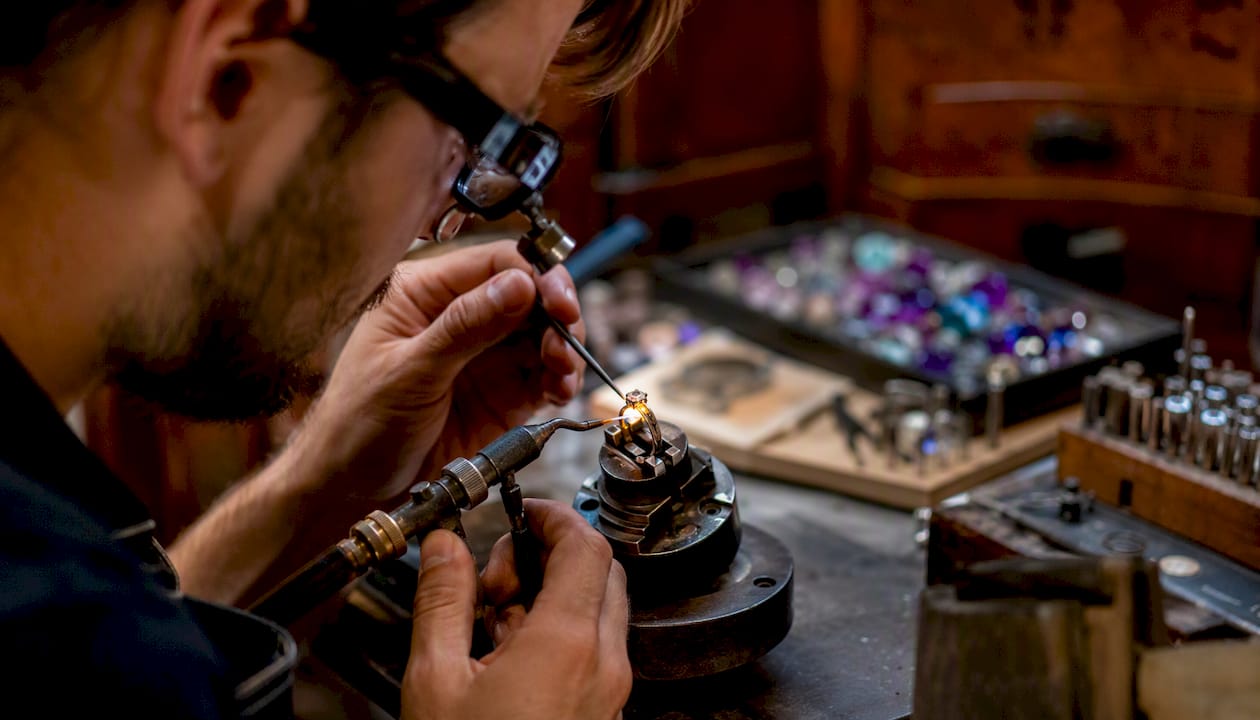
Prongs are the tiny claws that hold a stone in place. They wear down with daily contact and can snap if caught on fabric. Re-tipping adds a small bead of metal to the worn claw tip. If the prong is broken at the base, it needs rebuilding entirely. This is one of the most common repairs jewellers carry out, and one of the most important: a worn prong left unchecked is how stones go missing.
8. Loss of rhodium plating (white gold yellowing)
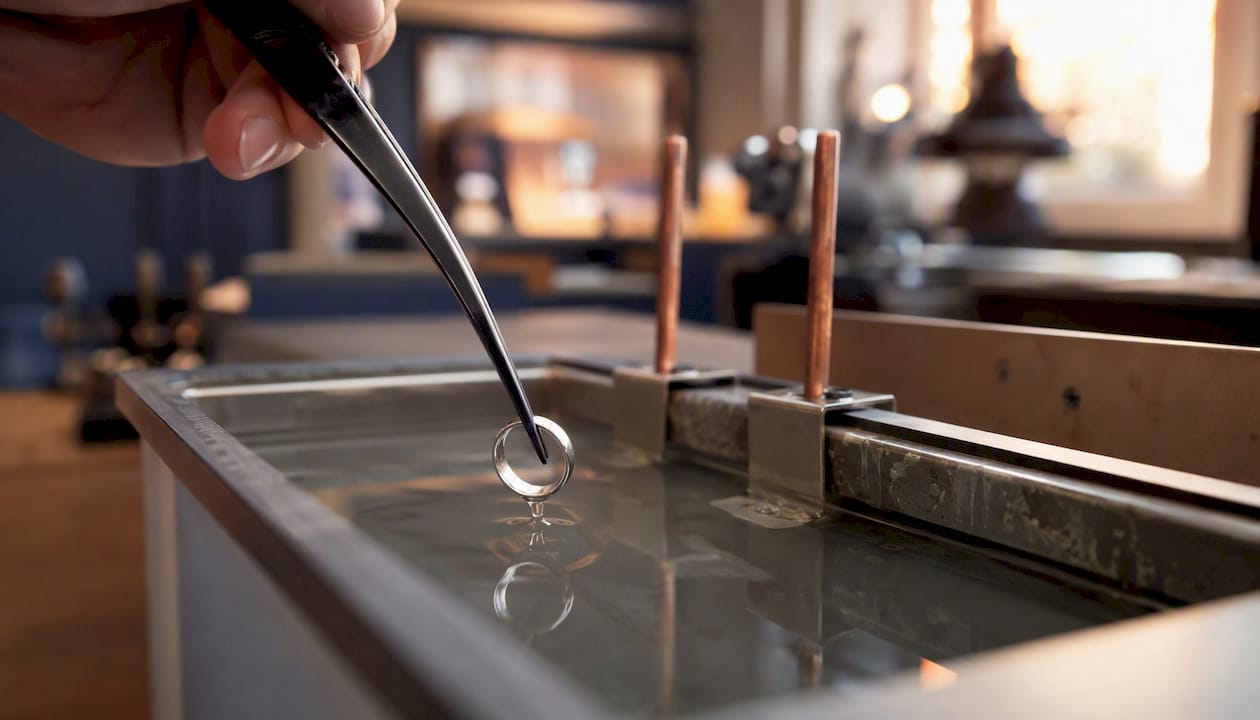
White gold is naturally a pale yellow. Rhodium plating gives it that bright white finish, but the plating wears off over 12–18 months of daily wear. Re-plating is a straightforward electroplating process: the ring is cleaned, polished, and dipped. The result looks brand new. It needs repeating periodically, which is worth factoring into the long-term cost of a white gold ring.
9. Cracked or non-resizable metals
Tungsten carbide and ceramic rings cannot be soldered, resized, or re-shaped. If cracked, they are replaced. Some tungsten rings can be cut off in an emergency (fire services and hospitals carry the right tools), but they cannot be repaired afterwards. If you have a tungsten or ceramic wedding band that no longer fits, replacement is the only route.
10. Chain or clasp failures
Some rings have a chain attachment or a clasp mechanism. Chains break at weak links or jump rings; clasps fail at the hinge or the catch. Both are soldered or replaced. Chain soldering is one of the quicker repair jobs a jeweller does.
Pro Tip: If a stone feels loose or you can hear it rattling, stop wearing the ring immediately. Every hour of wear increases the chance it falls out entirely.
| Problem | Usual repair | Typical UK cost | Typical turnaround |
|---|---|---|---|
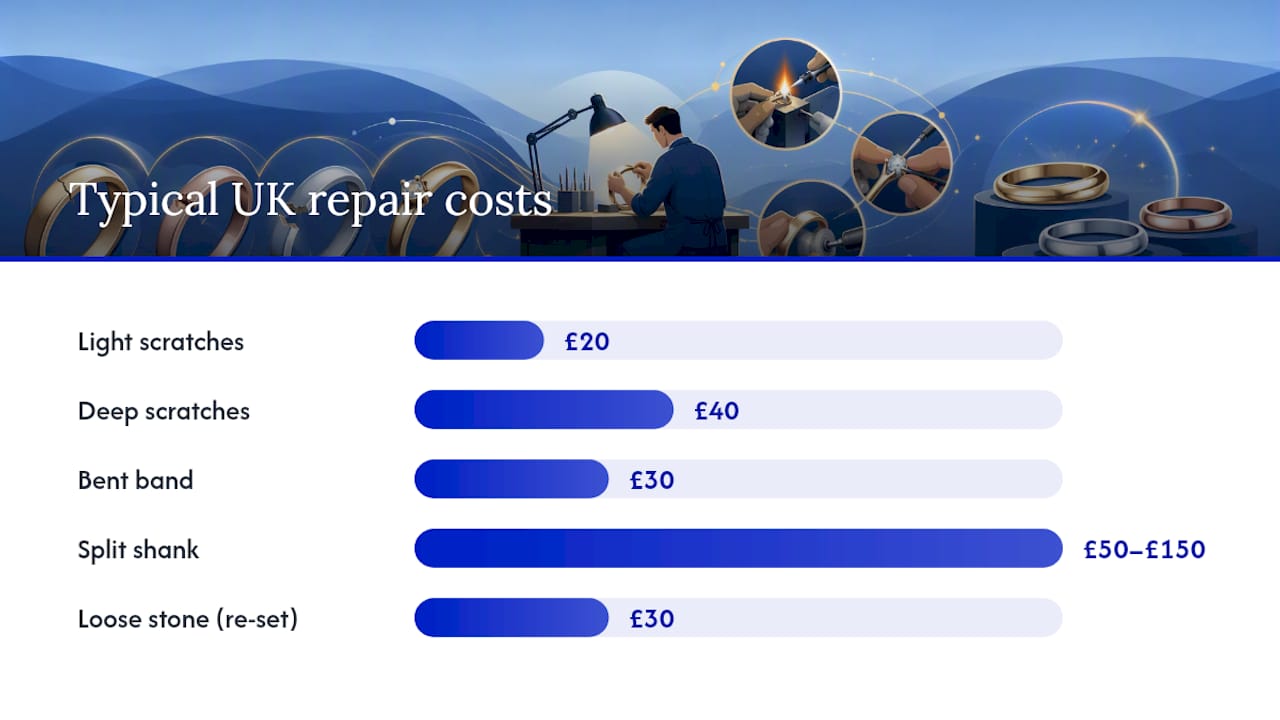
| Light scratches / dullness | Polish and refinish | £20 | Same day to 3 days |
| Deep scratches / gouges | Abrasive refinish + polish | £40 | 1–5 days |
| Bent band | Mandrel reshape + polish | £30 | Same day to 2 days |
| Split shank | Solder or re-shank | £50–£150 | 3–7 days |
| Resize (plain band) | Cut, add/remove metal, solder | £40 | 1–5 days |
| Resize (stone-set) | As above + stone work | — | 5 days |
| Loose stone / re-set | Re-set and secure | £30 | 3–7 days |
| Prong re-tip (per claw) | Add metal to worn tip | £15–£45 | 1–3 days |
| Rhodium re-plating | Electroplate | £35 | 1–3 days |
| Chain solder | Solder break | £25 | Same day to 2 days |
Prices vary by metal type, stone complexity and workshop. Always ask whether VAT and polishing are included in the quote.
What actually happens during a professional ring repair?
The process is more structured than most people imagine. Here is the standard sequence at a reputable UK jeweller, as recognised across the industry:
- Your consent — Nothing happens until you approve the quote. If additional problems are found mid-repair, the jeweller should contact you before proceeding.
Simple jobs like polishing or rhodium plating are often same-day or next-day. A re-shank or stone replacement typically takes 1–2 weeks if done in-house. Specialist remounts or complex multi-stone work can take 3 weeks or more. For a clearer picture of what to expect on timing, the on-site workshop guide at Blackwelljewellers breaks it down by job type.
DIY mistakes that make things worse (and when to call a professional)
Here is the short version: avoid DIY on anything involving stones, soldering, or reshaping. The longer version is below.
The most common DIY disasters jewellers see are:
- Superglue on a loose stone. It contaminates the setting, makes professional re-setting harder, and can crack certain stones when it cures.
- Filing a bent band with a metal file. This removes metal unevenly, thins the shank, and can create stress fractures.
- Amateur soldering. The wrong solder, wrong temperature, or wrong flux can discolour the metal, damage stones, and weaken the join permanently.
- Cheap re-plating kits. Home rhodium plating kits rarely adhere properly and can leave a patchy, uneven finish that a jeweller then has to strip before re-plating correctly.
- Forcing a tight ring off. Yanking a stuck ring can injure the finger and distort the band. Use cold water, soap, and elevation first.
DIY attempts frequently make the original problem worse and increase the final professional repair cost. Early intervention by a qualified goldsmith is almost always cheaper than fixing a DIY attempt.
Go to a jeweller immediately if:
- A stone is loose or missing
- The band is cracked or split
- The ring is stuck and the finger is swollen, painful, numb, or discoloured (this is a medical situation — A&E can remove a ring safely if needed)
- The ring has been bent significantly out of shape
Pro Tip: If a stone falls out, keep it. Even a chipped or cracked stone can sometimes be recut and reused, saving you the cost of a replacement. Store it in a small sealed bag and hand it to the jeweller with the ring.
For a full walkthrough of what to do with a broken or damaged ring, the broken ring repair guide at Blackwelljewellers covers emergency removal and next steps clearly.
How to look after your wedding ring after repair
A repaired ring is not indestructible. A few simple habits will keep it in good condition and reduce how often it needs professional attention.
- Book an annual check. A jeweller can spot a worn prong or a slightly loose stone before it becomes a lost stone. Regular inspection reduces the risk of stone loss and the cost of re-setting work later.
- Keep a repair record — Note the date, the work done, and the jeweller’s details. This is useful for insurance purposes and for tracking when the ring last had a full check.
Pro Tip: Ask your jeweller to keep a record of your ring’s metal test results and stone details. If you ever need to make an insurance claim or commission a replacement, that information is invaluable.
Should you repair or replace your wedding ring?
Repair is almost always the right answer for a ring with sentimental value or quality metalwork. But there are situations where replacement makes more sense.
Repair is usually worth it when:
- The ring has sentimental significance (an heirloom, a first wedding ring, a deceased relative’s piece)
- The metal is high quality (18ct gold, platinum, palladium) and structurally sound
- The stone is rare, large, or has personal significance
- The repair cost is well below the replacement cost
Replacement or remounting becomes sensible when:
- The repair cost approaches or exceeds the cost of a new ring of similar quality
- The metal is non-resizable or non-repairable (tungsten, ceramic)
- The shank has been re-shanked multiple times and the metal is too thin to work again
- The ring is a low-carat gold piece with no particular sentimental value
For antiques and heirlooms: conservation is the priority. Avoid aggressive polishing (it removes patina and detail), and consult a specialist restorer rather than a general jeweller if the piece is Victorian or earlier. The goal is to stabilise, not to make it look new.
A quick decision framework:
- Sentimental value? Repair.
- Repair cost under 50% of replacement? Repair.
- Non-resizable metal? Replace.
- Repair cost exceeds replacement? Replace (or remount the stones into a new setting).
- Antique or heirloom? Conserve and consult a specialist.
Why your ring fit changes from day to day
Your finger is not a fixed size. Temperature, sodium intake, activity level, and fluid retention all cause it to swell and shrink throughout the day. The practical implication: a ring that feels tight in the morning may fit perfectly by evening, and vice versa.
Finger size can vary by up to one full UK ring size between a cold morning and a warm, active afternoon. That is enough to make a well-fitting ring feel uncomfortably tight or worryingly loose, depending on the conditions.
Some causes are temporary: heat, a salty meal, a long run. Others are permanent: sustained weight change, arthritis, pregnancy. Pregnancy can shift ring size by several UK sizes, and jewellers recommend waiting at least three months after giving birth before resizing, to allow the finger to stabilise. After significant weight change, the standard advice is to wait six weeks at the new stable weight before committing to a permanent resize.
Pro Tip: Measure your finger in the late afternoon, ideally between 5pm and 9pm, and take readings on several different days before booking a resize. A single morning measurement is the most common cause of a ring being resized to the wrong size.
For arthritis where the knuckle is enlarged, sizing for the knuckle and using an adjuster insert is often a better solution than resizing. Forcing a ring over an enlarged knuckle risks injury and distorts the band.
Key takeaways
Most wedding ring faults have a straightforward professional fix; the key is catching them early, getting a written quote, and avoiding DIY on anything involving stones or soldering.
| Point | Details |
|---|---|
| Identify the fault first | Match your problem to the standard repair: scratches need polishing, loose stones need re-setting, worn prongs need re-tipping. |
| Avoid DIY on stones and solder | Superglue, amateur soldering, and home plating kits typically increase the final repair cost. |
| Get a written quote | Ask whether VAT and polishing are included; typical UK repairs range from £15 for a prong re-tip to £40 for a plain band resize. |
| Measure late afternoon | Finger size varies by up to one full UK size across the day; measure between 5pm and 9pm on several days before agreeing to a permanent resize. |
| Blackwelljewellers for repairs | Blackwelljewellers offers in-house goldsmith repairs, written quotes, hallmarking, and insured return shipping across the UK. |
The bit where we get a little opinionated
Here is something most repair guides will not tell you: the biggest mistake people make is not the DIY attempt. It is waiting.
A loose prong costs £15–£45 to re-tip. A lost stone costs £30–£150 to replace, and that is before you factor in the matching problem. A stone that has been missing for six months is harder to match than one that fell out last week. The longer you leave a known fault, the more expensive the eventual repair becomes.
There is also a cultural thing at play. People treat their wedding rings as untouchable, which is understandable. But that reverence sometimes translates into paralysis: they notice the ring is yellowing, or a prong looks thin, and they do nothing because they do not want to hand it over to a stranger. The result is a ring that deteriorates to the point where a simple re-plate becomes a full re-shank.
The other thing worth saying: not all jewellers are equal. The UK has no mandatory licensing for jewellers, which means the quality of repair work varies considerably. Ask whether the work is done in-house by a qualified goldsmith, or sent to a third-party workshop. Ask for a written quote. Ask what the warranty covers. These are not awkward questions; they are the minimum due diligence for a piece of jewellery that probably cost more than your first car.
A good jeweller will answer all three without hesitation.
What Blackwelljewellers can do for your ring
If your ring needs attention, Blackwelljewellers offers in-house repair work by qualified goldsmiths across its Kent stores (Maidstone, Gravesend, and Bexleyheath) and via its national online service. Every repair starts with a proper inspection and a written quote. Nothing is done without your approval.

Services include:
- Ring resizing (plain bands and stone-set rings where structurally possible)
- Re-shanking and soldering for split or cracked bands
- Stone re-setting and prong re-tipping
- Rhodium re-plating for white gold rings
- Full polish and refinish
- Bespoke remounts for stones you want to keep in a new setting
- Hallmarking after structural repairs
All repairs come with a written guarantee, and posted items are returned via insured shipping. If you are local to Kent, in-store assessments are free.
To book an assessment or submit your ring for a quote, visit the jewellery repairs page at Blackwelljewellers. If you are considering a replacement rather than a repair, the second-hand jewellery collection includes authenticated, hallmarked wedding bands at a range of price points.
Useful sources and further reading
- What causes ring size changes - Ringchart.co.uk
- Can finger size change during the day - Ringchart.co.uk
- Jeweller costs in the UK – Typical prices, tables and FAQs
- The 5 Most Common Jewelry Repairs Done by Professionals
- Jewelry Repair Pricing Guide | MyJewelryRepair.com
- Is it normal for finger size to change throughout the day? - Aureus Boutique
- Watch & jewellery repair industry UK - IBISWorld
- Blackwell Jewellers