

If your diamond feels loose, stop wearing the ring right now and put it somewhere safe. Don’t push the stone, don’t try to glue anything, and don’t wait to “see if it gets worse”. Book it in with a professional jeweller as soon as you can, ideally the same day. That’s it. That’s the whole verdict. Everything else in this article is about how to check, why it happened, and what happens next.
TL;DR:
- Most loose diamonds can be properly checked with simple tests like tapping, wobbling with a pen cap, or inspecting with your eyes, without special equipment.
- Worn prongs from everyday impact or metal fatigue are the most common causes of loose stones, especially in accent or halo settings.
- Immediate action involves removing the ring, storing it safely, and visiting a jeweller for a professional assessment and repair; DIY fixes should be avoided.
- Repairs typically range from prong tightening to re-tipping or full re-setting, with costs escalating accordingly, and most are quick and affordable if caught early.
- Regular monthly checks and annual professional inspections significantly reduce the risk of losing a stone and help identify wear before it becomes a costly repair.
Table of Contents
- What should I do if a diamond is loose in my ring?
- Why do diamonds come loose in the first place?
- What are the immediate steps if a diamond is loose?
- What does a jeweller actually do to fix it?
- How often should I check my ring and clean it?
- What happens when you bring a loose ring into Blackwell Jewellers?
- An honest word on loose diamonds
- Get your ring checked properly, not guessed at
- Sources
What should I do if a diamond is loose in my ring?
Right, before you panic and start Googling “can I fix this myself with superglue” (please don’t), let’s talk about how to actually confirm the stone is loose. You don’t need fancy kit. You need your ear, your fingertip, and about ninety seconds.
- The tap test. Hold the ring near your ear and gently tap the setting with a fingernail or a soft object. A faint rattle usually means the stone is loose in its setting. Silence is good news.
- The pen-cap test. Rest the flat end of a pen cap (or just your fingertip) gently against the stone and press, sideways, not down. Any detectable wobble means it’s time to stop wearing the ring, full stop.
- The fabric test. Run the ring gently across a piece of paper or a soft cloth. A stone that catches, snags, or clicks against fabric is telling you the prongs aren’t doing their job properly.
- The eyeball test. Under a bright lamp, look at the prongs. Are any of them flattened, thin, or missing their little “hook” over the stone? That’s your visual smoking gun.
Pro Tip: Do all three physical tests before you decide anything. A rattle alone might just be a slightly loose halo stone; a rattle plus visible worn prongs means don’t wear that ring again until a jeweller has seen it.
Why do diamonds come loose in the first place?
Some signs are obvious. Some are sneaky.
- Obvious signs: you can see the stone move, hear it rattle, or a prong is visibly bent or missing.
- Sneaky signs: the diamond looks slightly duller than usual (light isn’t hitting it evenly because it’s sitting at a new angle), or it catches on jumpers when it never used to.
- Prong wear is the biggest culprit, and it’s simply metal fatigue from years of knocks, hand washing, and general life. Many rings need re-tipping every five to ten years depending on how hard they’re worn.
- Sudden impact (catching the ring on a car door, a gym weight, a toddler) can bend a prong in an instant.
- Manufacturing shortcuts or previous sloppy repairs can leave a setting weaker than it looks.
Here’s something most owners don’t realise: accent stones, the little ones flanking the centre diamond, are held by far less metal, so they tend to loosen before the main stone does. If your engagement ring has a halo or pavé shoulders, check those little stones first.
What are the immediate steps if a diamond is loose?
Right, you’ve confirmed movement. Now what?
- Take it off. Immediately. Not “after this meeting” or “once I’ve done the washing up”. Now.
- Store it properly. Pop it in a small padded box or a fabric ring pouch, label it if it’s going in a drawer with other jewellery, and keep it somewhere you won’t forget.
- Do not attempt a DIY fix. No superglue, no pressing the prong down with pliers, no “just pushing it back in”. You’ll almost certainly make the seat worse or scratch the stone.
- If a stone is already missing, search methodically. Check pockets, the car footwell, the bathroom plughole trap, the vacuum bag if you’ve hoovered recently. Any stone you find, however small, goes straight into a labelled pot.
- Contact your insurer if the ring is covered, before any repair work happens in some cases, so check your policy wording first.
Pro Tip: If a centre stone has actually fallen out or you can see daylight through a gap where a prong should be, that’s a same-day jeweller visit, not a “next week” job. A missing stone is a repair; a missing setting head can mean a full re-setting.
What does a jeweller actually do to fix it?
This is where most people’s imagination runs wild, so here’s the reality.
A jeweller will inspect the ring under a loupe, checking prong thickness, how well the stone’s girdle sits in its seat, and whether the metal around the setting has thinned. From there, the fix usually falls into one of three tiers:
- Tightening or re-bending prongs. The quickest fix, often done the same day, and the cheapest option because it’s just reshaping existing metal.
- Re-tipping. This adds new metal to worn prong tips, restoring the grip properly rather than just bending old, thinned metal back into shape. It takes longer and costs more than a simple tightening.
- Full re-setting or stone replacement. Needed when a prong has broken off entirely, the setting head is damaged, or a stone is missing. This is the most involved job, may need the stone or metal ordering in, and is where insurers most often get involved.
Repair, graded. Industry practice generally treats these as escalating tiers. Quick tightening is common and inexpensive; re-tipping is a durable mid-level repair; full re-setting or replacement is the costliest, and the option most likely to involve an insurance claim.
Costs vary a fair bit depending on metal type and how many prongs need attention, but as a rough shape: tightening sits at the low end, re-tipping in the middle, and re-setting or replacement at the top. If you want a clearer sense of what different repair jobs typically involve, our guide to common jewellery repairs breaks down the usual categories, and if the ring is an older or inherited piece, vintage ring restoration covers what changes when the setting is decades old.
How often should I check my ring and clean it?
Nobody wants another chore on the list, but this one’s genuinely quick.
- Monthly: run the tap test and eyeball check at home. Takes two minutes, catches problems early.
- Annually: get a professional inspection, even if nothing feels wrong. Regular checks are the single biggest factor in avoiding a lost stone, because a jeweller will spot prong wear you can’t see or feel yet.
- Daily habits: take rings off for the gym, heavy cleaning, gardening, or anything involving impact or chemicals.
- Cleaning: a soft brush with mild soapy water is fine for most settings. Skip ultrasonic cleaners unless a jeweller has confirmed your specific setting can handle the vibration, some older or damaged settings genuinely cannot.
Pro Tip: Bring any paperwork you have, valuation, receipt, insurance schedule, when you go for your annual check. It speeds up any claim later and helps the jeweller match repair work to the ring’s original specification.
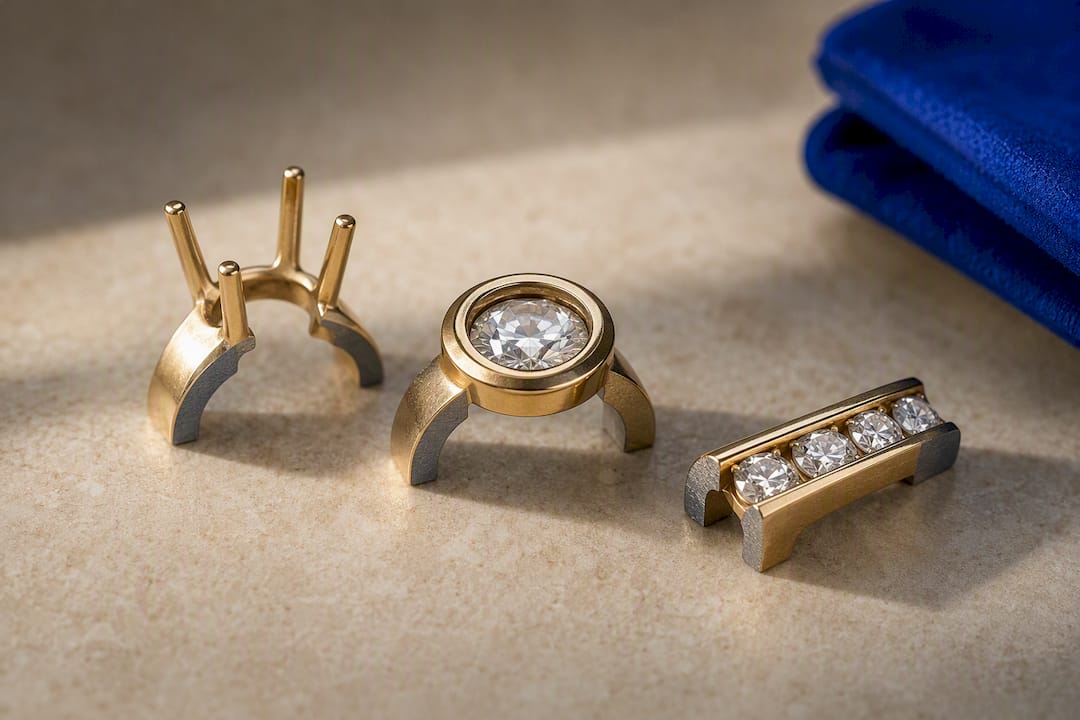
If your setting is a bezel or channel rather than prongs, the risk profile is different again. Bezel and channel settings enclose the stone in a continuous rim of metal rather than a few claws, so they resist knocks better but wear differently, and worth mentioning to whoever inspects it.
What happens when you bring a loose ring into Blackwell Jewellers?
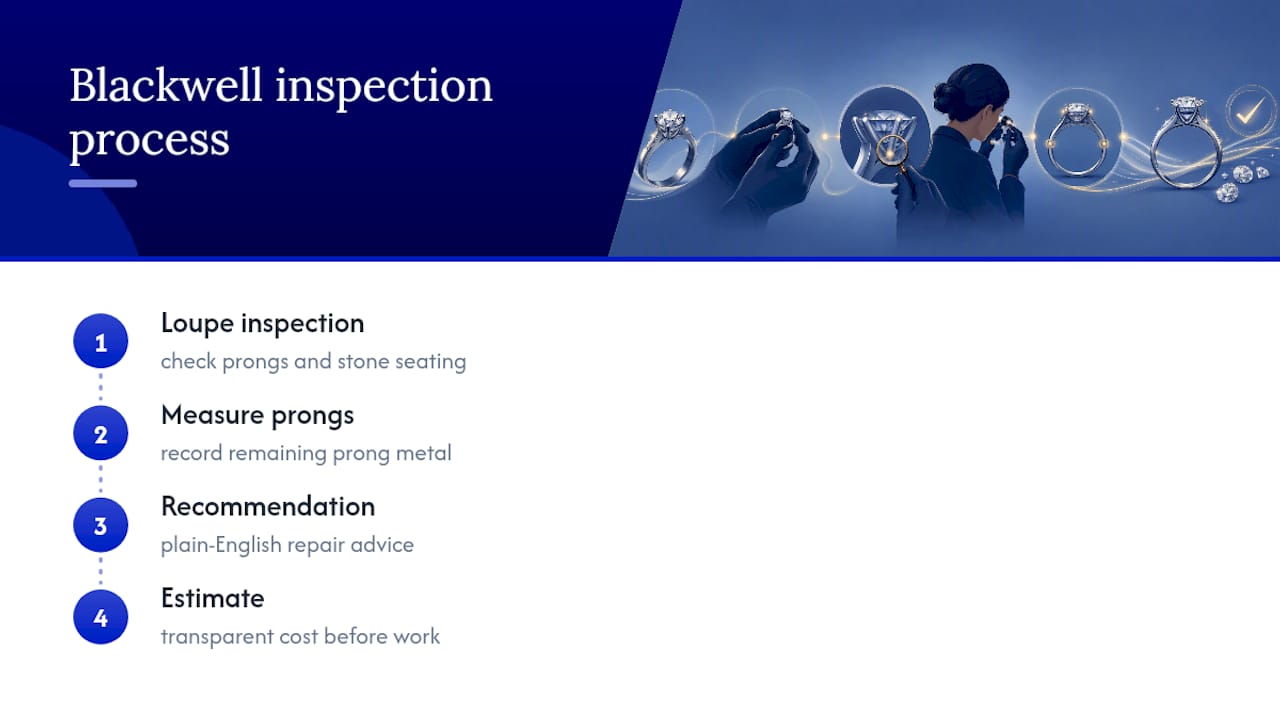
After more than 20 years trading across our Kent stores, in Maidstone, Gravesend and Bexleyheath, and online, we’ve seen every version of “I think my diamond might be loose”. The process is straightforward: a loupe inspection to check prong condition and how the stone sits in its seat, a measurement of remaining prong metal, then a plain-English recommendation and a transparent estimate before any work starts.
Most tightening jobs are quick. Re-tipping or re-setting takes longer, and we’ll always tell you honestly whether restoration or a fresh setting makes more sense for the stone and the ring’s history.
An honest word on loose diamonds
Here’s what gets missed in most “loose diamond” advice online: people treat every wobble as an emergency requiring a same-day dash to a jeweller, or they treat every wobble as nothing and carry on wearing the ring for months. Neither is right. The tap test and pen-cap test genuinely do most of the diagnostic work, and they take less time than reading this sentence.
Where conventional advice falls short is cost anxiety. Owners delay getting a ring checked because they assume it means an expensive re-setting, when the reality is that most loose-stone cases are a simple prong tightening, over in minutes, for not very much money at all. The expensive scenarios (full re-setting, stone replacement) almost always follow from ignoring the cheap early warning, not from bad luck.
Prioritise the monthly check. It’s the one habit that turns a £30 tightening into the whole story, rather than a missing stone and an insurance claim.
— James
Get your ring checked properly, not guessed at
A YouTube tutorial can tell you a stone is loose. It can’t tell you whether your prongs need bending, re-tipping, or replacing entirely, and getting that wrong at home is how a simple wobble turns into a lost diamond. Our jewellers carry out in-house repairs, meaning the person assessing your ring is the same person who fixes it, not a middleman sending it off elsewhere and adding weeks to the wait.

If you’re not sure whether your ring needs tightening, re-tipping, or a full re-setting, bring it in and we’ll tell you honestly, with a clear estimate before anything is touched. If you have a valuation, receipt, or insurance schedule, bring that too, it helps us match the repair to the ring’s original specification. For anyone weighing up repair against other routes for an older or financially tight situation, our pawnbroking service is also worth a conversation. Otherwise, head to our jewellery repairs page to book an inspection, or read more on choosing a repair provider if you’d like to compare what a proper assessment should include first.
Sources
- How to Check If Your Diamond Is Loose
- How to Tell If a Diamond Is Loose | 4 Home Tests | Sparklean
- How To Determine Whether Your Diamond Is Loose In The Setting - Diamond Registry
- Protective gem settings - Gemological Institute / GIA educational content