
The global estate jewellery market is valued at approximately $4.2 billion in 2025, yet many buyers still picture dusty, outdated pieces when they hear the word ‘estate.’ That misconception costs people dearly. Estate jewellery is not a category of the old and unwanted; it is one of the most intelligent, sustainable, and often breathtaking ways to buy fine jewellery today. Whether you are drawn to the intricate craftsmanship of a Victorian brooch or the bold geometry of an Art Deco ring, this guide will clarify exactly what estate jewellery is, how to verify its authenticity, why it matters for the planet, and how to buy, care for, and eventually resell with real confidence.
Table of Contents
- What qualifies as estate jewellery?
- Authenticity and craftsmanship: what buyers should look for
- Sustainable shopping: why estate jewellery matters
- Practical guidance: how to select, care for and resell estate jewellery
- Why estate jewellery is more than just a trend
- Discover authentic estate jewellery at Blackwell Jewellers
- Frequently asked questions
Key Takeaways
| Point | Details |
|---|---|
| Clear definitions | Estate jewellery means any previously owned piece, not just antiques. |
| Authenticity matters | True estate jewellery is backed by provenance and quality craftsmanship. |
| Sustainable shopping | Buying estate jewellery supports eco-conscious, circular luxury in the UK. |
| Care and resale | Proper care and smart selection enhance both enjoyment and value. |
| Beyond trends | Estate jewellery offers personal history and unique stories, not just style. |
What qualifies as estate jewellery?
The term ‘estate jewellery’ is straightforward at its core: it refers to any piece of jewellery that has been previously owned. That is the only strict requirement. A ring worn once before being sold qualifies just as much as a brooch passed down through four generations. The word ‘estate’ comes from the legal concept of a person’s estate, meaning their total assets, and jewellery sold from such estates historically carried that label.
Where buyers often get confused is in distinguishing estate jewellery from two related categories: vintage and antique.
| Category | Definition | Age requirement |
|---|---|---|
| Estate | Any previously owned piece | No minimum age |
| Vintage | Reflects a specific era’s style | Typically 20 to 99 years old |
| Antique | Historically significant, older pieces | 100 years or older |
So a diamond pendant bought in 2015 and resold today is technically estate jewellery. A 1960s charm bracelet is vintage. A Georgian mourning ring from the 1820s is antique. All three fall under the broader estate umbrella, but the distinctions matter when you are assessing value, rarity, and historical significance.
What makes estate jewellery genuinely special is not simply age. It is the combination of provenance (the documented history of ownership), craftsmanship that often predates mass production, and the sheer variety of styles available. The thriving $4.2 billion market reflects exactly this: buyers worldwide recognise that pre-owned pieces carry a richness that brand-new jewellery rarely matches.
Here is what typically defines a desirable estate piece:
- Hallmarks confirming metal purity and country of origin
- Provenance documentation such as receipts, valuations, or family records
- Period-specific craftsmanship including hand-engraving, milgrain edging, or filigree work
- Rarity of design, gemstone, or maker
- Condition reflecting careful ownership and storage
The idea that estate means inferior is simply wrong. Many estate pieces were made to a standard that modern mass-produced jewellery cannot replicate. Hand-set stones, individually crafted settings, and metals worked by skilled artisans are hallmarks of eras when jewellery was built to last a lifetime, not a season.
Authenticity and craftsmanship: what buyers should look for
Knowing the definitions is one thing. Knowing how to verify what you are actually buying is another. Authenticity in estate jewellery rests on several pillars, and understanding each one protects your investment.
Hallmarks are your first line of defence. In the UK, hallmarking has been legally required for centuries, making British estate jewellery particularly traceable. A hallmark will typically tell you the metal’s purity (for example, 750 for 18ct gold), the assay office where it was tested, and often the year of manufacture. Learning to read these small stamps is one of the most practical skills any estate jewellery buyer can develop.
Provenance paperwork adds another layer of confidence. Original receipts, insurance valuations, and certificates of authenticity all support a piece’s history. Not every estate piece will come with paperwork, but its presence significantly strengthens the case for authenticity and fair pricing.
Look closely at the craftsmanship itself. Pre-owned pieces from quality eras often show:
- Stones set individually by hand, with slight variations that confirm handwork
- Settings with depth and detail that casting cannot replicate
- Consistent wear patterns consistent with genuine age, not artificial distressing
- Structural integrity: clasps, hinges, and prongs that still function correctly
Pro Tip: Run a fingernail gently across a stone’s surface. Genuine older stones, particularly old-cut diamonds, have a different facet geometry to modern cuts. If the facets feel unusually broad and the stone has a warmer, candle-like glow, you are likely looking at a genuinely period piece.
Buying from reputable sources matters enormously. Our refurbished jewellery quality guide explains how professional inspection, cleaning, and restoration processes work, so you know exactly what standard a piece has been brought to before it reaches you. For ongoing care, professional maintenance advice helps you protect your purchase long after you take it home.
The sustainable pre-owned market continues to grow precisely because buyers are becoming more discerning. They want verified quality, not just a bargain.
Sustainable shopping: why estate jewellery matters
Authenticity and quality are compelling reasons to buy estate jewellery. But there is a broader argument that resonates strongly with today’s buyers: sustainability.
Mining new gold and gemstones carries a significant environmental cost. Gold mining produces roughly 20 tonnes of waste rock for every single gram of gold extracted. Diamond mining displaces enormous volumes of earth and consumes vast quantities of water. Choosing estate jewellery sidesteps all of this entirely.
“Buying estate jewellery is one of the most tangible ways a consumer can reduce their environmental footprint without sacrificing beauty, quality, or meaning.”
This is not a fringe position. The growing $4.2 billion market reflects a genuine shift in consumer priorities, particularly among UK buyers who are increasingly conscious of where their luxury goods come from.
| Factor | New jewellery | Estate jewellery |
|---|---|---|
| Mining impact | High | None |
| Carbon footprint | High (extraction, processing, shipping) | Minimal |
| Circular economy | No | Yes |
| Traceability | Variable | Often documented |
| Unique character | Standardised | Inherently individual |
Estate jewellery fits naturally into the circular economy, a model where products are kept in use for as long as possible rather than discarded and replaced. When you buy a pre-owned sapphire ring, you are extending the life of materials that have already been extracted, refined, and crafted. No new resources are consumed. No new waste is generated.
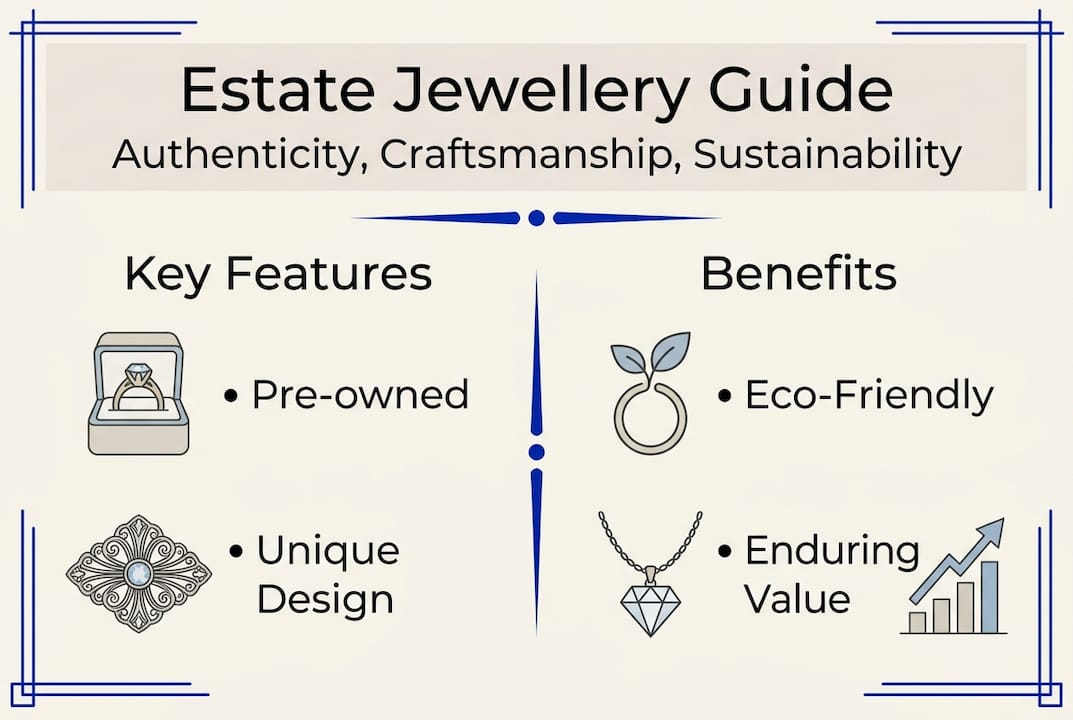
For buyers who care about jewellery trends and sustainability together, estate pieces offer something new jewellery simply cannot: a genuinely responsible luxury choice that does not require compromise on beauty or quality.
The shift is real and measurable. Younger buyers in particular are choosing pre-owned fine jewellery at rates that would have seemed unlikely a decade ago, driven by both environmental awareness and an appreciation for pieces that carry genuine history.
Practical guidance: how to select, care for and resell estate jewellery
Understanding estate jewellery’s value is the foundation. Knowing how to act on that understanding is what makes the difference between a confident buyer and a hesitant one.
Selecting estate jewellery: a practical checklist
- Examine hallmarks under magnification before purchasing
- Ask for any available provenance documentation
- Inspect settings, clasps, and prongs for structural soundness
- Request a professional appraisal if the piece is high-value
- Buy from dealers who offer transparency about restoration work carried out
- Check that stones are secure and show no signs of recent, undisclosed re-setting
Caring for your estate pieces
Estate jewellery often requires slightly more attentive care than modern pieces, simply because it may have delicate settings or older metalwork. Avoid common jewellery care mistakes such as using ultrasonic cleaners on pieces with foil-backed stones or enamel work. Store pieces individually in soft pouches to prevent scratching. Remove jewellery before swimming, cleaning, or applying perfume.
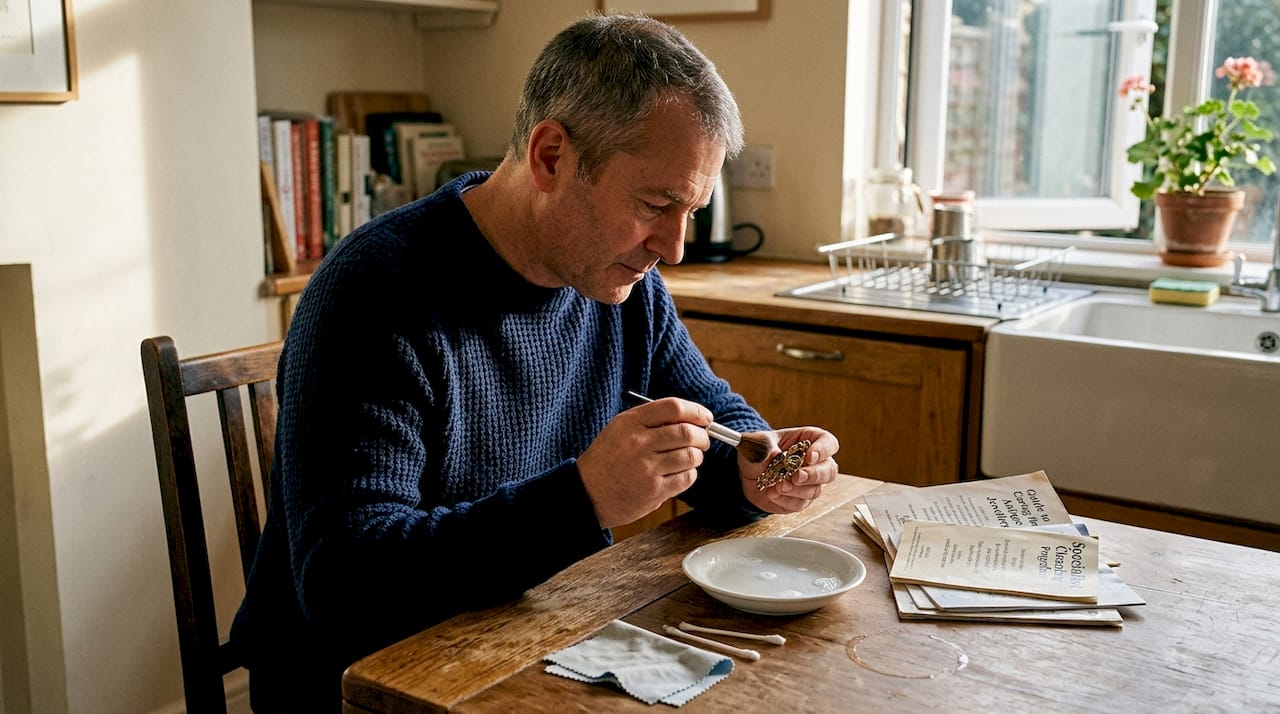
For a full routine, our pro jewellery care tips outline exactly how regular professional checks can reduce losses and extend the life of your collection significantly.
Pro Tip: Keep a simple written record of each estate piece you own: where you bought it, what you paid, any restoration work done, and its estimated value. This record is invaluable if you ever need to insure, sell, or pass on the piece.
Reselling estate jewellery
One of the underappreciated advantages of estate jewellery is that well-chosen pieces often hold or increase their value over time. If you decide to sell, our estate jewellery selling guide walks you through the best options available in the UK, from specialist dealers to auction houses, and explains how to get a fair price. The pre-owned market’s strength means genuine pieces from reputable sources rarely struggle to find willing buyers.
Why estate jewellery is more than just a trend
Most guides on estate jewellery focus on definitions, authentication, and sustainability. Those things matter. But they miss something important.
Every estate piece carries a story. A 1930s platinum engagement ring was once slipped onto someone’s finger during a moment of genuine emotion. A Victorian mourning locket held a lock of hair from someone deeply loved. These are not sentimental extras; they are part of what you are actually buying.
At Blackwell Jewellers, we have seen customers connect with estate pieces in ways that simply do not happen with new jewellery. A buyer once told us that wearing a pre-owned Art Nouveau pendant felt like carrying a conversation across time. That is not something a new piece from a high-street catalogue can offer.
We also believe that estate jewellery repairs are acts of respect, not just practicality. Restoring a damaged clasp or re-tipping a worn prong honours the craftsmanship of the original maker. It keeps a piece in the world rather than letting it disappear.
The emotional and expressive power of estate jewellery is real, and it is worth taking seriously when you make your next purchase.
Discover authentic estate jewellery at Blackwell Jewellers
If this guide has shifted how you think about estate jewellery, the next step is finding pieces you can trust completely.
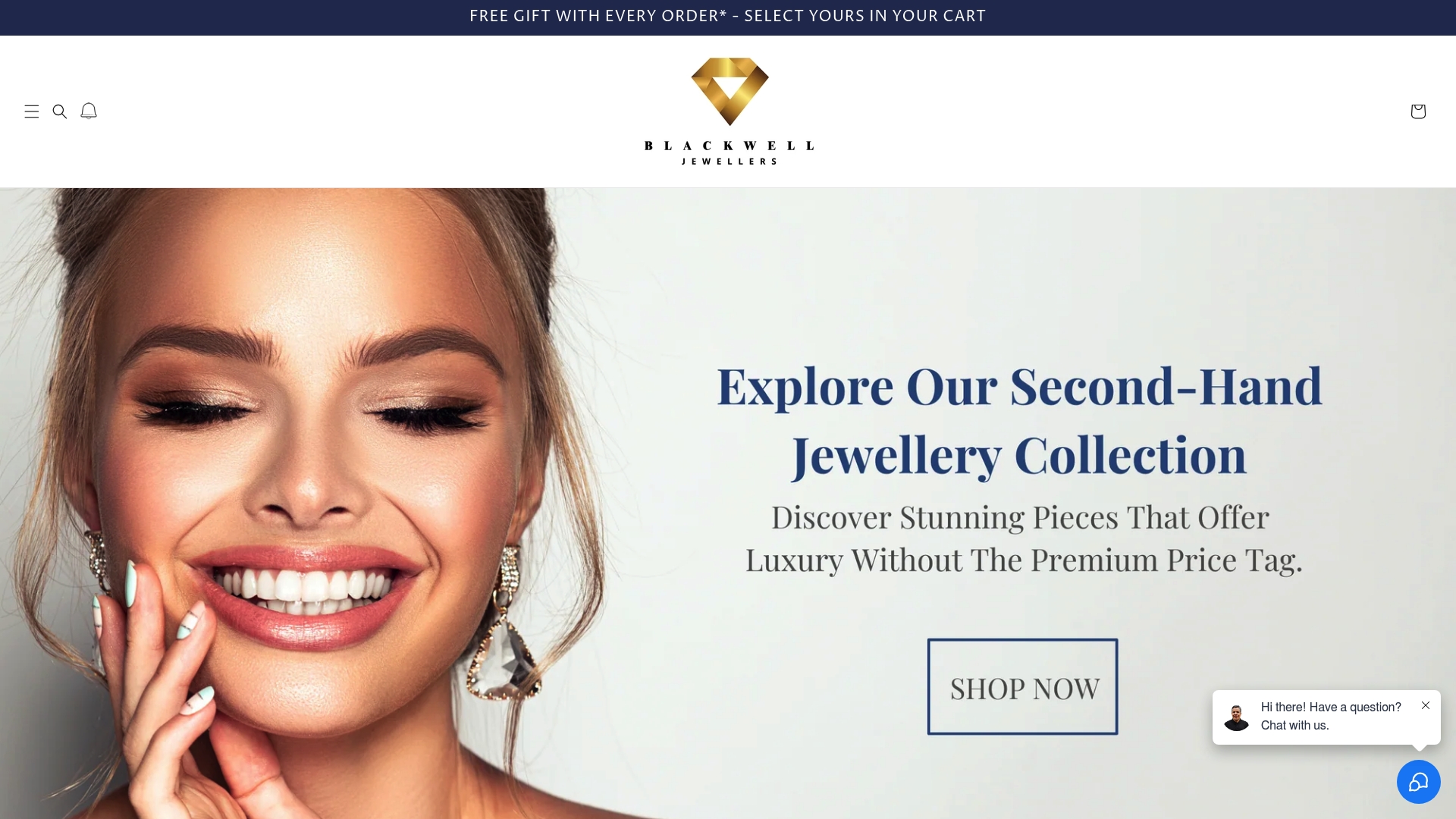
At Blackwell Jewellers, every pre-owned piece in our collection is rigorously inspected, hallmarked, and restored by our in-house team before it reaches you. With over 20 years of trading and stores across Kent in Maidstone, Gravesend, and Bexleyheath, we combine genuine expertise with transparent provenance. You can shop our estate jewellery collection online or visit us in person. For buyers who want to protect their purchase long-term, our aftercare essentials guide is a practical starting point for maintaining the pieces you love.
Frequently asked questions
What is the difference between estate, antique and vintage jewellery?
Estate jewellery is simply any previously owned piece, while antique refers to items over 100 years old and vintage usually means between 20 and 100 years old. All three categories can overlap, as an antique piece is also technically estate jewellery.
Is estate jewellery always valuable?
Estate jewellery’s value depends on rarity, condition, craftsmanship, and provenance rather than age alone. A well-preserved mid-century piece with strong hallmarks and documented history can be worth considerably more than a poorly maintained antique.
How can I tell if estate jewellery is authentic?
Check for hallmarks, ask for any available provenance paperwork, and purchase from reputable dealers who carry out professional inspections. For high-value pieces, an independent appraisal from a qualified gemmologist adds an important layer of confidence.
Is buying estate jewellery sustainable?
Yes. Purchasing estate jewellery reduces mining demand and supports responsible consumption by keeping existing materials in use rather than extracting new ones, making it one of the most genuinely sustainable choices in fine jewellery.