
TL;DR:
- The pre-owned jewellery market is a sophisticated and growing sector, currently valued at $28 billion in 2022 and expected to reach $45 billion by 2027. It comprises four tiers, each with different trust, pricing, and authentication standards, emphasizing the importance of verifying provenance and proper certification. Buying from reputable dealers and utilizing digital tools like product passports supports sustainability and ensures genuine value in second-hand jewelry.
Most people think buying pre-owned jewellery is a gamble. You’re either getting something romantic and storied, or something dodgy with a murky past. But that’s a lazy take on what’s actually a sophisticated, layered market. The ecosystem of pre-owned jewellery involves auction houses, specialist dealers, digital authentication tools, and peer-to-peer sellers, all operating at different trust levels and price points. The secondhand jewellery market is projected to grow from $28 billion in 2022 to $45 billion by 2027. That’s not a niche hobby. That’s a structural shift in how people buy, wear, and think about jewellery.
Table of Contents
- Key takeaways
- How the pre-owned jewellery ecosystem is structured
- Authentication and the provenance puzzle
- The environmental case for buying pre-owned
- How mainstream retail is reshaping the market
- Practical tips for buying pre-owned sustainably
- My honest take on all of this
- How Blackwelljewellers can help you buy smarter
- Common questions
Key takeaways
| Point | Details |
|---|---|
| The market has four tiers | From auction houses to peer-to-peer sales, each tier has different trust levels, pricing, and authentication standards. |
| Authentication is non-negotiable | Hallmarks, gemstone certifications, and provenance records determine both value and genuine sustainability. |
| Recycling rates are shockingly low | Only about 12% of jewellery is recycled globally, making the pre-owned market an urgent environmental fix. |
| Retail integration is accelerating | Major retailers are rolling out certified pre-owned programmes, boosting buyer confidence significantly. |
| Circularity has real limits | When repair costs exceed resale value, jewellery exits the circular economy. Informed buying helps prevent this. |
How the pre-owned jewellery ecosystem is structured
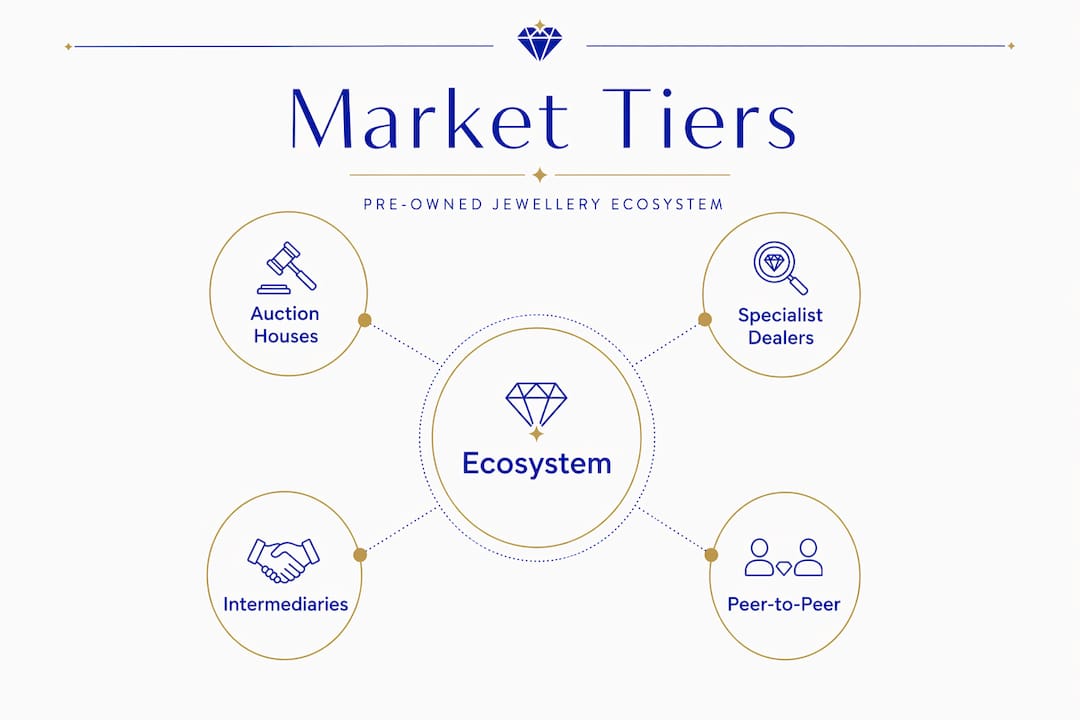
Think of it less like a single marketplace and more like a food chain. Every tier serves a different buyer, handles different price points, and carries different levels of risk. Understanding the secondary luxury jewellery ecosystem is the first step to buying smarter.
Here’s how the four tiers break down:
-
Tier 1: Auction houses. These handle high-value, historically significant pieces, often from estates or private collections. The trade-off is cost. Auction houses typically charge buyers a 15 to 25% commission on top of the hammer price, which eats into apparent savings. That said, provenance documentation at this level tends to be exceptional, and authenticity is rarely in question.
-
Tier 2: Specialist dealers. Businesses like Blackwelljewellers sit in this tier. They source, authenticate, restore, and resell pre-owned pieces directly to consumers. Authentication is rigorous, pricing is transparent, and you’re dealing with people who know the hallmarks, the gemstone grading, and the structural quirks of the pieces they’re selling.
-
Tier 3: Semi-professional intermediaries. Think smaller online sellers or occasional market traders who buy to resell. Inconsistency is the problem here. Some are knowledgeable. Some aren’t. Due diligence falls squarely on the buyer.
-
Tier 4: Peer-to-peer platforms. Sites where individuals sell directly to other individuals. Seller proceeds can be higher because there’s no middleman taking a cut. But buyer risk is also higher. Without a professional authentication check, you’re largely relying on photographs and seller descriptions, which is not exactly reassuring when you’re parting with real money.
The tier you buy from shapes everything: the price you pay, the documentation you receive, and how confident you can be that the piece is exactly what it’s claimed to be.
Pro Tip: When buying pre-owned jewellery, always ask which tier your seller operates in and what authentication processes they follow before committing to a purchase.
Authentication and the provenance puzzle
Here’s where it gets genuinely interesting. Authentication in the pre-owned jewellery market is not a simple box-ticking exercise. For fine jewellery, specialists use a combination of hallmarks (those tiny stamped codes that confirm metal purity and country of origin), brand-specific signatures, and gemstone certifications from bodies like the Gemological Institute of America. Fashion jewellery is a different story entirely. When there are no hallmarks and no certifications, proving what something is made of becomes much harder, which is why the economics of reselling fashion pieces rarely stack up.
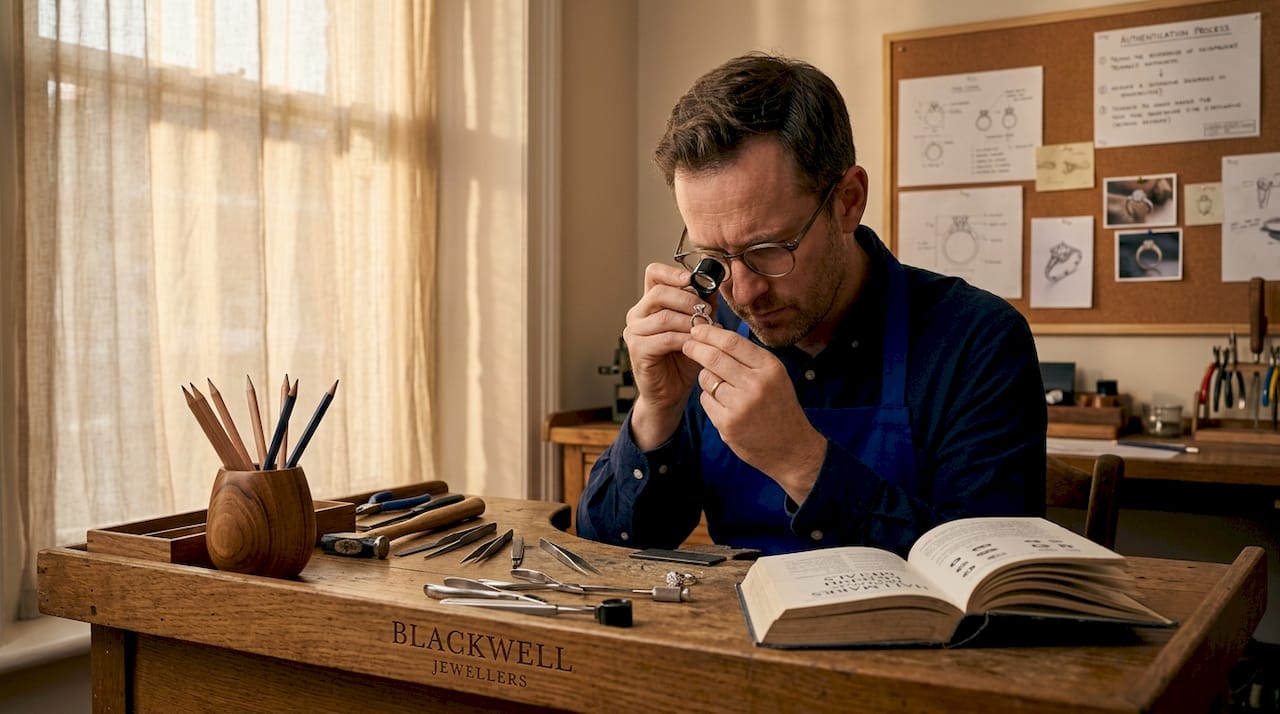
Provenance matters too, and not just for the historical romance of it. Ownership history can affect insurance value, resale price, and even legal compliance in some cases (think stolen goods legislation). A solid provenance record is not just nice to have. It’s a genuine asset.
The risks of fraud in this space are real. Counterfeit luxury pieces are sophisticated enough to fool untrained eyes. So how do you protect yourself? A few practical steps:
- Request hallmark documentation. Any reputable dealer should be able to point you directly to the hallmark and explain what it confirms. If they can’t, walk away.
- Ask for gem certifications. For any diamond or coloured gemstone purchase, an independent grading report from a recognised laboratory is non-negotiable.
- Check provenance records. The more ownership history that can be documented, the better.
- Use specialist dealers with physical accountability. Online-only sellers with no physical presence carry more risk than dealers you can actually visit.
- Look for EU Digital Product Passports. Emerging as a significant development in authentication, digital product passports store lifecycle data, provenance records, and sustainability indicators for high-value items, reducing counterfeit risk and aiding ethical buyer decisions.
Pro Tip: If you’re buying pre-owned online, always cross-check the seller’s hallmark claims against the UK Assay Office’s guidance. It takes five minutes and could save you hundreds of pounds.
Learning how to inspect pre-owned jewellery properly before you commit is worth every minute of your time.
The environmental case for buying pre-owned
Let’s talk numbers, because they’re genuinely alarming. Only about 12% of jewellery is recycled globally, while roughly 60% ends up in landfills, where pieces can persist for over 200 years. Two hundred years. That gold bracelet your aunt didn’t want could outlast entire generations in a landfill while new gold is being blasted out of the ground somewhere else.
The comparison between new and pre-owned is stark:
| Factor | New jewellery | Pre-owned jewellery |
|---|---|---|
| Raw material mining | High demand, significant ecological disruption | No new mining required |
| Carbon footprint | Significant, from extraction to manufacturing | Minimal, mainly cleaning and repair |
| Landfill contribution | High if discarded | Removed from landfill by re-entering circulation |
| Water usage | Very high in mining and processing | Negligible |
| Community impact | Often tied to complex supply chains | Locally contained resale process |
Pre-owned jewellery, when it circulates properly, sits neatly within circular economy thinking. The authentication infrastructure that keeps items verifiable and desirable is what prevents them from being scrapped and melted down. Without it, the sustainability argument collapses.
That said, there are honest limits to how circular this market actually is. Market insiders note that when repair or authentication costs outweigh resale value, jewellery often exits the circular economy entirely and gets scrapped. So the environmental benefit of buying pre-owned is real, but it’s also contingent on buying pieces that can be properly maintained, authenticated, and kept in wearable condition.
“The resale ecosystem’s environmental leverage depends not just on selling pre-owned pieces, but on maintaining the authentication and repair infrastructure that keeps jewellery circulating rather than discarded.”
Your choices as a buyer directly influence this. Buying from dealers who invest in proper restoration and authentication, rather than simply passing items on as-is, supports a genuinely circular model.
How mainstream retail is reshaping the market
Something interesting has happened in the last few years. Pre-owned jewellery is no longer the exclusive territory of antique fairs and estate sales. Major retailers have started integrating certified pre-owned categories into their mainstream offerings, and it’s changing the game for buyers and sustainability outcomes alike.
Watches of Switzerland recorded a 22% year-on-year increase in sales partly aided by certified pre-owned rollouts, which signals that institutional backing for pre-owned goods genuinely drives consumer confidence. When a major retailer puts its name behind a pre-owned piece, the authentication credibility goes up considerably. That’s not a small thing.
What does retail integration mean for you as a buyer?
- Wider access. Pre-owned pieces are no longer buried in specialist catalogues or obscure auction lots. They’re in mainstream storefronts, searchable and browsable.
- Stronger authentication guarantees. Retailer-backed certified pre-owned programmes typically include inspection, restoration, and a warranty. That’s a significant layer of reassurance.
- Support for sustainable behaviour. When buying pre-owned is made as easy as buying new, more people do it. The sustainable jewellery market grows as friction decreases.
- Pricing transparency. Certified pre-owned programmes tend to publish clear pricing criteria, reducing the guesswork around whether you’re paying a fair premium.
The challenge, of course, is that blending primary and secondary markets creates complexity around pricing integrity and brand perception. But the direction of travel is clear. Certified pre-owned is becoming a permanent feature of serious jewellery retail, not an afterthought.
Practical tips for buying pre-owned sustainably
Alright, you’re convinced the market is real, the environmental case is sound, and you want in. Here’s how to actually do it without getting stung.
-
Start with authentication, not aesthetics. Yes, the piece has to appeal to you visually. But the first question to ask is always: can this be verified? Check for hallmarks, ask for certifications, and confirm the dealer’s authentication process before you fall in love with the design.
-
Factor in repair and refurbishment. A piece that needs significant work isn’t automatically a bad buy, but you need to cost it in. Understanding how jewellery is refurbished properly helps you assess whether a bargain is actually a bargain or just a problem with a price tag.
-
Choose your platform deliberately. Auction houses for significant historical pieces. Specialist dealers for authenticated everyday luxury. Peer-to-peer only if you have sufficient knowledge to protect yourself, or if you’re buying something low-value where the risk is manageable.
-
Ask about digital provenance tools. Digital product passports are becoming more common for high-value resale items. If a seller can provide one, it’s a meaningful indicator of transparency.
-
Support repair culture. Every piece you get repaired rather than replaced is a vote for circularity. It extends the item’s life, keeps it out of landfill, and reduces demand for new mining. That’s the benefits of pre-owned accessories in their most active form.
-
Know the common pitfalls. Pieces described as “solid gold” without hallmarks are a red flag. So are gemstone claims without grading certificates. So is pressure to buy quickly. Slow down, ask questions, and verify independently.
Pro Tip: When buying second-hand jewellery in the UK, always check that the hallmark includes the Assay Office symbol alongside the metal purity mark. Both should be present on any legitimate pre-owned gold or silver piece.
The vintage jewellery ecosystem rewards patience. Take your time, build your knowledge, and you’ll make genuinely satisfying purchases that align with your values.
My honest take on all of this
I’ve spent years watching people dismiss pre-owned jewellery as a lesser option, and it genuinely frustrates me. Not in a self-righteous way. More in a “you’re missing something really good” way.
In my experience, the biggest gap in how people approach this market is that they think about sustainability as a vague moral bonus rather than a concrete outcome that depends on specific choices. Buying pre-owned from a dealer who doesn’t invest in proper authentication or repair support is not actually that much better for the planet than buying new. The impact of second-hand jewellery is real, but it’s not automatic.
What I’ve found is that the emotional value of a pre-owned piece, the history, the craftsmanship, the sense that something beautiful has already lived a life, often exceeds what you get from a brand new item. But that emotional reward and the sustainability reward only both materialise when you buy from someone who genuinely knows what they’re doing with the piece before it reaches you.
Digital tools like the EU Digital Product Passport are promising. Retail integration is promising. But neither replaces the value of a skilled jeweller who can look at a piece, authenticate it, restore it properly, and tell you honestly what you’re getting. That human element is still where the real trust lives. And it’s what the best dealers in this market have always understood.
— James
How Blackwelljewellers can help you buy smarter
If you’ve read this far, you already know that the pre-owned jewellery market rewards buyers who do their homework. Blackwelljewellers has spent over 20 years doing exactly that homework for you. Every piece in the second-hand jewellery collection is inspected, authenticated, hallmarked, and restored by expert jewellers in their Kent stores before it reaches a customer. That’s not marketing language. That’s a practical commitment to the kind of authentication and quality that actually makes pre-owned sustainable, not just cheaper.
If you have a piece that needs attention before resale or continued wear, the jewellery repair service is designed to extend item life and keep pieces circulating properly. For those interested in ethically sourced new pieces alongside pre-owned, explore the ethical diamonds range available in Maidstone. Real accountability, real craftsmanship, and a genuine understanding of why provenance matters.
Common questions
What is the ecosystem of pre-owned jewellery?
The ecosystem of pre-owned jewellery refers to the layered market of auction houses, specialist dealers, intermediaries, and peer-to-peer sellers that facilitate the resale and circulation of second-hand jewellery, each operating with different trust levels and authentication standards.
Why is authentication so important in pre-owned jewellery?
Authentication confirms a piece’s metal purity, gemstone quality, and ownership history, protecting buyers from fraud and ensuring the item retains genuine resale value. Without it, both the financial and sustainability cases for buying pre-owned are significantly weakened.
How does buying pre-owned jewellery help the environment?
Pre-owned jewellery reduces demand for new mining and keeps items out of landfill, where they can persist for over 200 years. However, the environmental benefit depends on pieces being properly authenticated and maintained so they stay in active circulation rather than being scrapped.
What is a Digital Product Passport and why does it matter for jewellery buyers?
A Digital Product Passport is a digital record storing a product’s provenance, sustainability data, and lifecycle history. For pre-owned jewellery buyers, it offers a significant layer of traceability and fraud protection, making high-value resale purchases more transparent.
How fast is the pre-owned jewellery market growing?
The secondhand jewellery market is projected to grow from $28 billion in 2022 to $45 billion by 2027, with vintage jewellery’s share of total US jewellery sales doubling from 8% to 15% between 2018 and 2023.